How Stellar Wins Institutional Trust with Independent Onchain Insights


Raja Chakravorti, Chief Business Officer, on making the institutional case for building on Stellar — and why independent research convinces banks in a way a network's own numbers can't.
Stellar is a Layer 1 blockchain purpose-built for financial services, and one of the oldest networks in crypto: twelve years of continuous operation, 99.99%+ uptime, and more than 100 million payment operations a month across 3 million+ active addresses.
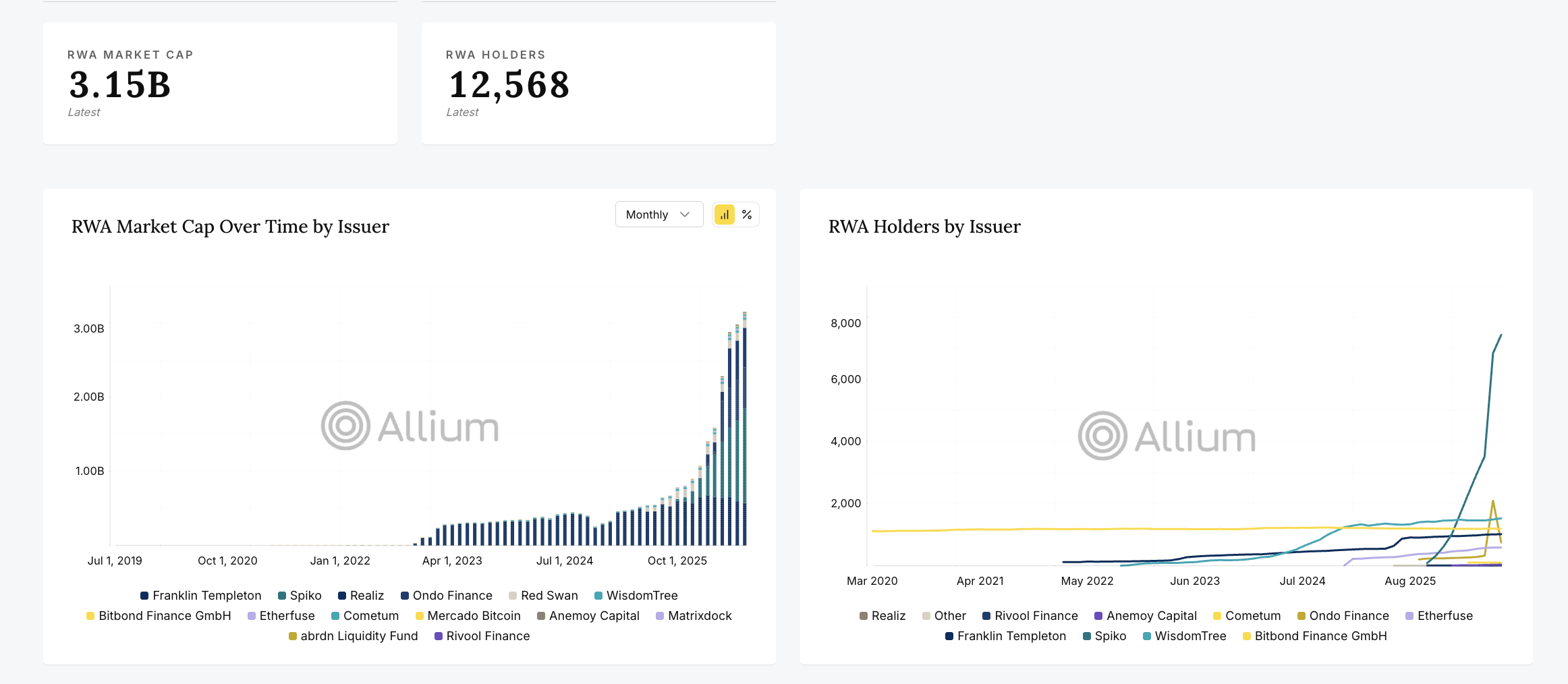
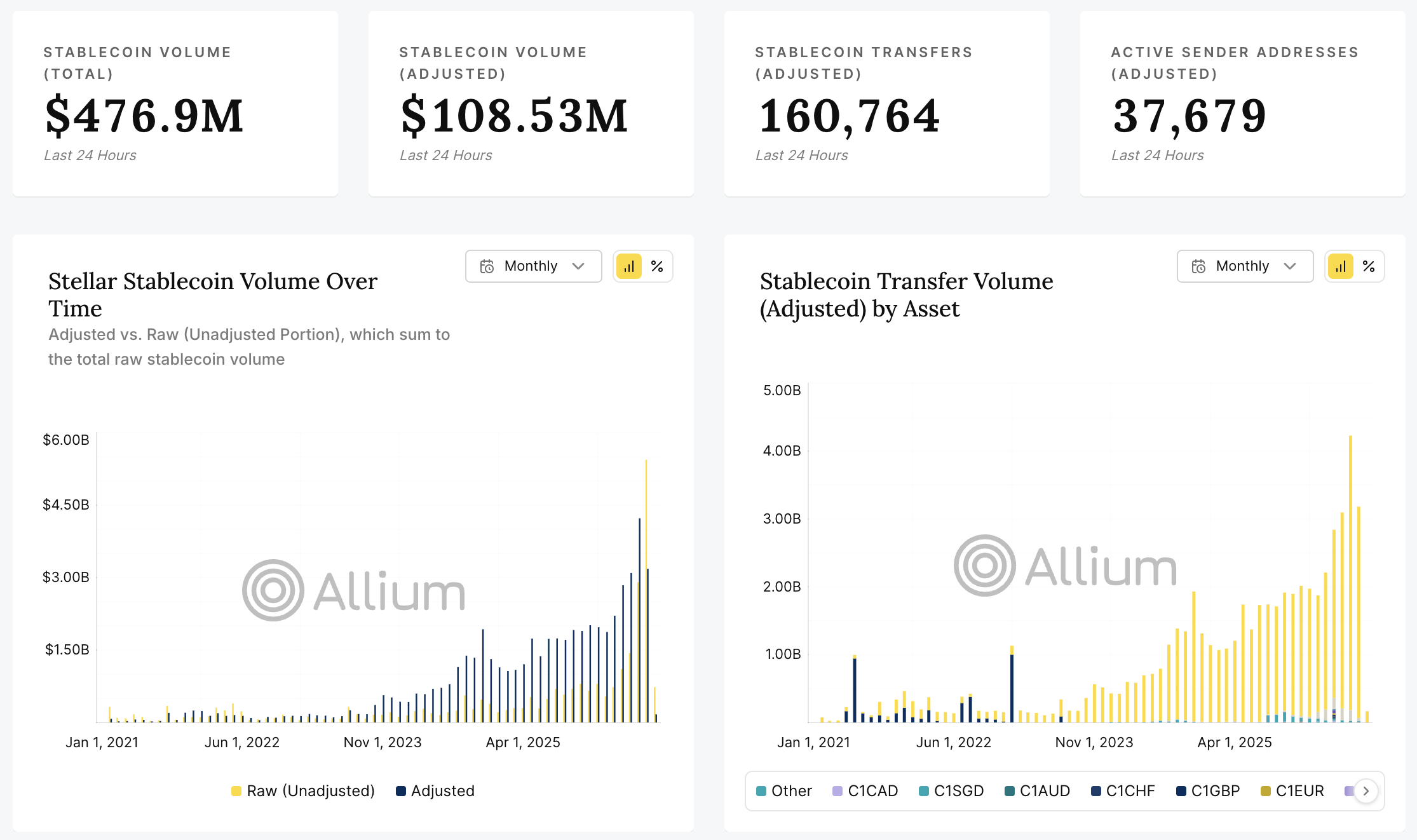
The network settled over $4B in adjusted stablecoin transfer volume in June across 13 stablecoins and nine currencies, and hosts $3B+ in tokenized real-world assets from a dozen regulated issuers including Franklin Templeton, Ondo Finance, and WisdomTree (Allium, July 2026).
Raja Chakravorti is Chief Business Officer of the Stellar Development Foundation, and his job is to make Stellar's case with the banks, regulators, and enterprises deciding whether to build and transact onchain.
Institutional buyers require more than a network's own transaction and supply numbers, so Stellar makes its case with independent data and research built on Allium.
Twelve years in, institutions have arrived
Stellar's original goal when launching was to "move value at the speed of the internet." For years that meant payment rails for cross-border corridors: letting people send money across borders and off-ramp into local currencies, so a digital asset became something they could actually use inside their own economy.
As the network matured, that focus widened from moving money to tokenizing the assets themselves — putting regulated products like money market funds and government bonds directly onchain. That required solving the one thing keeping institutions on the sidelines: control. Stellar built those controls into the core protocol at the consensus layer, rather than bolting them on through smart contracts.
"The features we built are fairly forward-thinking — oriented around asset control, the ability to do a freeze or a clawback as necessary. If you think about an institutional use case, there's a desire to come onchain, but the absence of control creates risk vectors for an institution's internal capacity. These are the types of features that actually allow institutions to come on at scale."
With regulation shifting and institutional appetite growing, the demand Stellar spent a decade building toward is arriving, with Franklin Templeton, WisdomTree, and Etherfuse all having chosen Stellar to issue regulated, tokenized products.
Institutions discount what a network says about itself
Raja came to Stellar from traditional finance, and it shapes how he reads the market.
"In the broader crypto sphere, there's a lot of hype-cycle movement — things people invest in based more on hope than on logic. What we're focused on is how blockchain can augment financial services at scale: reducing settlement times, taking cost out of the equation, creating auditability. Those are the things that matter for financial services."
When a foundation cites statistics about its own network, an institution discounts them. A bank evaluating Stellar wants an account of what the network actually does — payment volumes, settlement patterns, tokenized asset activity — from a source that has no stake in the answer. The institutions that evaluate networks most rigorously now treat that independent data as a requirement before they'll commit to moving onchain.
"The data should speak for what's happening on the network. When we're talking to institutions, small businesses, and consumers, giving them clarity on what's happening and what it means for them is really important."
How Stellar works with Allium
Allium and the Stellar team built a live dashboard, at stellaranalytics.allium.so, that tracks stablecoin flows, payment volume, and RWA activity on the network in real time. Every figure is methodology-backed and traces to onchain data anyone can verify: $3.1B in tokenized RWAs across 12 issuers and 13,000+ holders, 13 stablecoins spanning nine currencies, and more than 100 million payment operations a month, including path payments that route multi-currency conversions through the native DEX in a single transaction.
Allium Research has also published two in-depth reports on the network: Stellar: Institutional Infrastructure for Global Settlement and Tokenized Assets and Franklin Templeton on Stellar: Onchain Analysis.
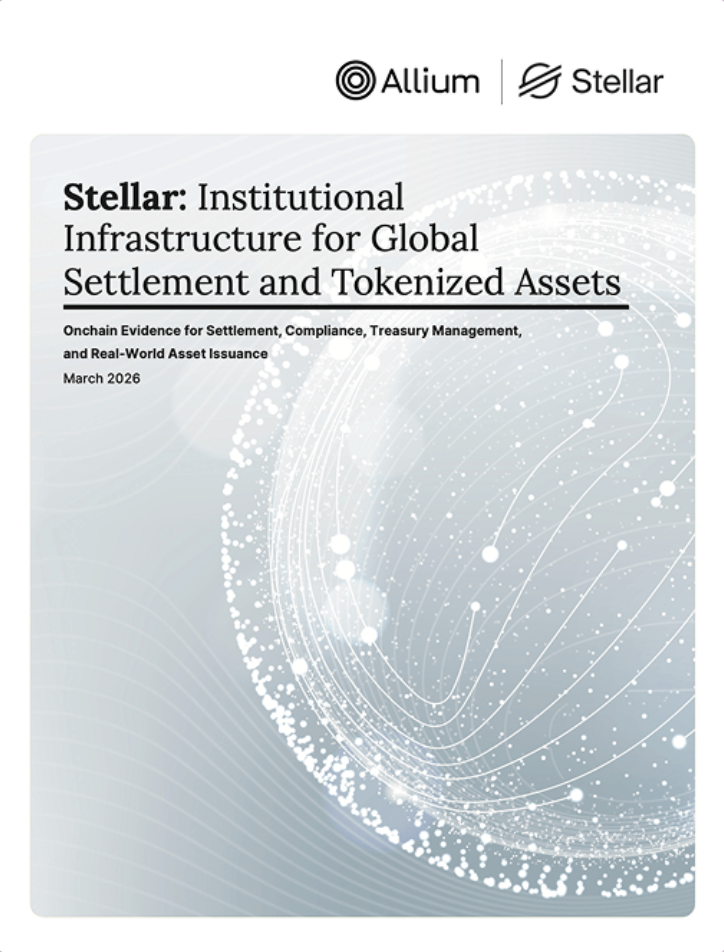
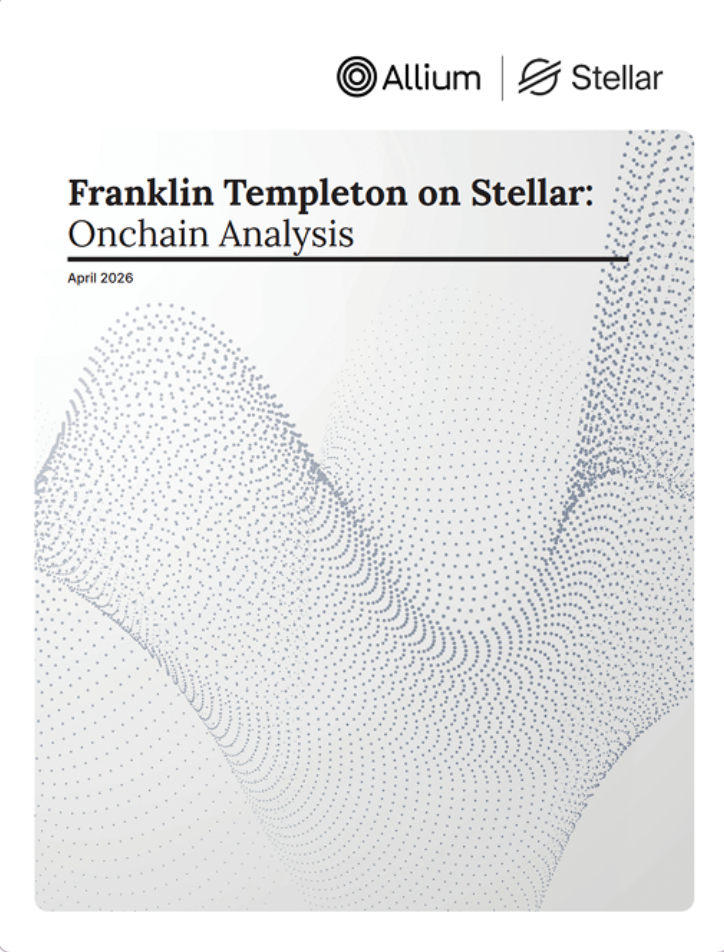
Together, the dashboard and reports give Stellar's business development team a third-party evidence layer to bring into conversations with the most demanding counterparties.
"The clarity of the reports that Allium has put out has been foundational for how we've been able to position ourselves."
What Allium enables for Stellar
Conversations that open with evidence. When Stellar sits down with a bank, a regulator, or an enterprise, it points to externally produced numbers on how the network is actually used. The meeting starts from verified fact instead of a pitch.
Credibility with the most skeptical buyers. Institutions move slowly and demand rigorous justification before committing to new infrastructure. A methodology-backed report from an independent firm carries weight that self-published figures never will.
A record that compounds. Each report adds to a body of independent analysis the team reuses across partnership discussions, regulatory conversations, and industry engagement. Stellar's operational track record supplies credibility; Allium's research supplies the market picture.
Independent data is becoming the standard for institutional crypto
For a blockchain network trying to win institutional adoption, technology and track record are rarely enough on their own. Institutions want independently verified evidence of what the network does, at what scale, and for whom. Operational reliability gets a network in the room; independent data is what earns the decision.
"Allium shows the growth and trajectory, and why those metrics matter, as an independent third party tuned into what's happening. That kind of ground truth helps bigger institutions come on board."
For the institutions on the other side of the table, that ground truth does the same job in reverse: it separates a credible network from a marketing claim. As banks, asset managers, and regulators move real activity onchain, independent data is what gets both sides to a decision built on fact.
Explore the Stellar Dashboard on Allium.
Follow Raja Chakravorti and Stellar on X.
Building infrastructure for institutional blockchain adoption? Contact us →