Tokenized Gold: 1.27M Ounces Onchain, Up 49%
Tokenized gold tokens each represent one troy ounce of physical gold held by an issuer. The two largest, XAUT and PAXG, now represent 1.27M ounces, up 49% in a year.

Tokenized gold is a token that represents ownership of physical gold held in a vault by an issuer, usually one troy ounce per token, so gold can be held and transferred on a blockchain. According to Allium's dataset, the two largest products, Tether Gold (XAUT) and PAX Gold (PAXG), represent 1.27 million troy ounces, up 49% from 855,000 a year earlier, so the growth is in the amount of gold, not only in its price (Allium data, November 2, 2026).
Key takeaways
- XAUT represents 827,000 troy ounces, up 58% in a year. PAXG represents 447,000, up 34%.
- XAUT has more gold behind it but fewer holders: about 63,750 against about 90,900 for PAXG, so the average XAUT holder holds more than twice as much.
- Each token is a claim on gold held by the issuer. The issuer's custody, audits and redemption terms are what make the token worth an ounce.
- This article measures ounces. Dollar values move with the gold price, which can hide whether more gold is actually being tokenized.
How tokenized gold works
- The issuer buys or holds physical gold bars in a vault, usually London Good Delivery bars.
- It mints one token per troy ounce, and the token's serial bar allocation is published or available to holders.
- Holders can transfer the token onchain, trade it on exchanges, or redeem it with the issuer for gold or cash, on the issuer's terms and minimums.
The two leading products follow this model with different issuers. Tether Gold is issued by Tether. PAX Gold is issued by Paxos, a New York-regulated trust company. Both represent one fine troy ounce per token.
What Allium data shows
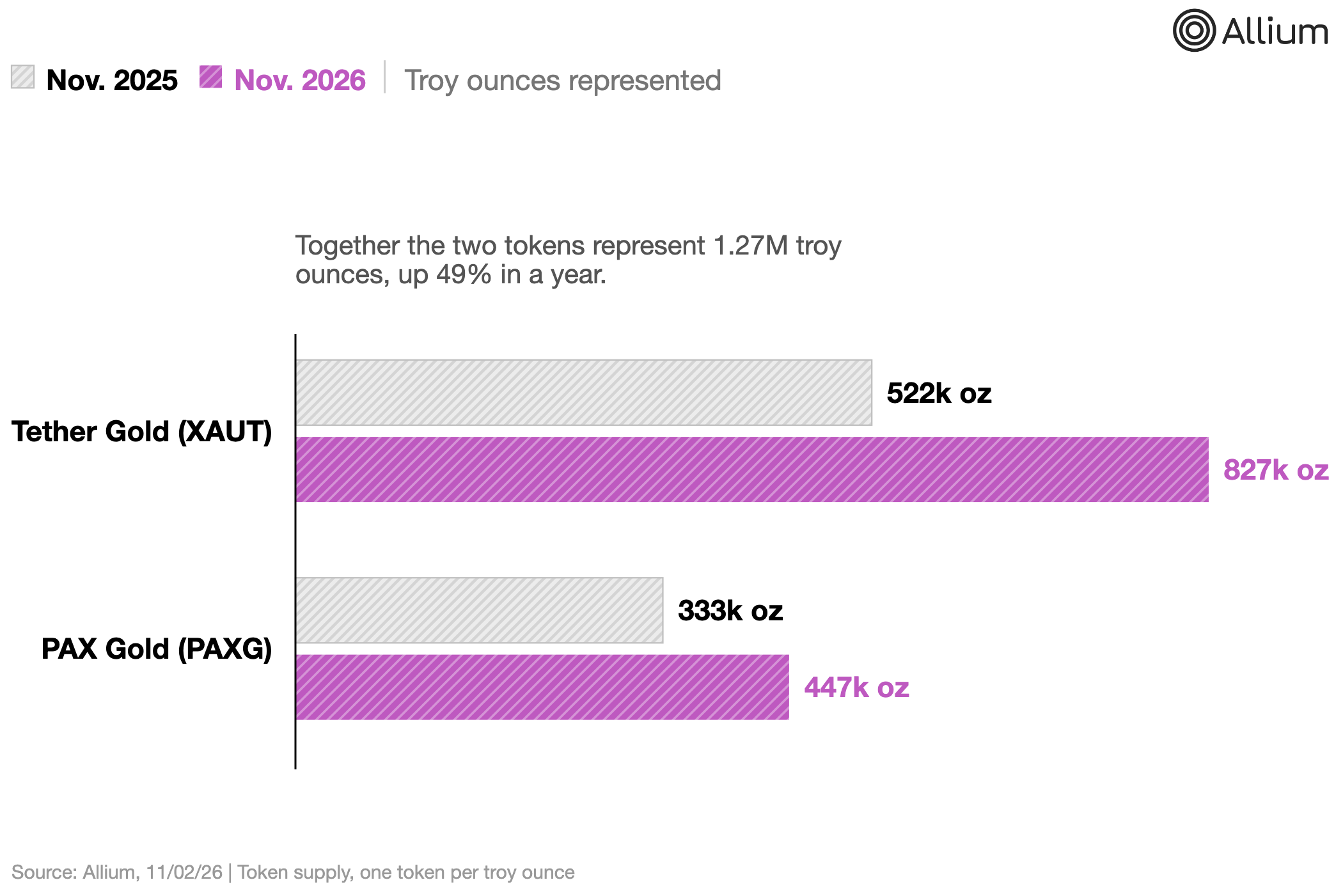
| Product | Ounces, Nov 2025 | Ounces, Nov 2026 | Change | Holders |
|---|---|---|---|---|
| Tether Gold (XAUT) | 522,089 | 827,418 | +58% | about 63,750 |
| PAX Gold (PAXG) | 332,952 | 447,298 | +34% | about 90,900 |
| Combined | 855,041 | 1,274,716 | +49% |
Allium data, November 2, 2026. Holder counts are summed across the chains each product is on.
Two readings follow. First, more gold is being tokenized, not just revalued: the ounce count is independent of the gold price. Second, the two products are held differently. XAUT averages about 13 ounces per holder and PAXG about 5, so XAUT's growth is concentrated in larger holders. Smaller products, including Tether Gold's multichain format and Matrixdock Gold, are spread across up to 10 chains but remain a small fraction of the total.
Why ounces are the cleaner measure
A tokenized gold total in dollars combines two things: how many tokens exist and what price is applied to each. Any difference in price feeds between products, or a sharp move in gold, changes the dollar figure without a single ounce moving. Counting units avoids that, as long as each product is resolved to the same fields: issuer, token, chain, units, and what one unit represents. Allium's RWA datasets carry supply per token and chain, which is what allows the ounce count above. For how commodity-backed stablecoins differ from tokenized gold funds, see what backs a commodity-backed stablecoin.
Frequently asked questions
What is tokenized gold?
A token representing ownership of physical gold held by an issuer in a vault, usually one troy ounce per token, that can be transferred and traded on a blockchain.
What is the difference between XAUT and PAXG?
XAUT is issued by Tether and PAXG by Paxos. Both represent one troy ounce each. XAUT represents more gold, PAXG has more holders.
How much gold is tokenized?
XAUT and PAXG together represent 1,274,716 troy ounces on November 2, 2026, according to Allium, up 49% in a year.
Can tokenized gold be redeemed for physical gold?
Usually, on the issuer's terms and minimums, which differ by product. Check each issuer's redemption policy.
See the data behind this post. Browse the RWA tables, or read How Do You Identify a Tokenized Fund Across Chains? for how the records are put together.
Building something that needs this data? Talk to the team.
Allium provides onchain data infrastructure. Companies named in this article may be Allium customers, prospects or commercial counterparties. The authors and other Allium personnel may hold positions in the assets discussed. This article is informational only and is not investment, legal or tax advice. Data and information last reviewed: November 4, 2026.