What Is Allium Terminal? The Onchain Intelligence Platform for Institutions

Allium Terminal is an onchain analytics platform that helps users understand blockchain adoption, stablecoin activity, payments, tokenized assets, prediction markets, and other onchain activity. It combines blockchain data, attribution, segmentations, and analytics into a single interface, allowing users to move from raw onchain activity to actionable insights.
Blockchain data is public. Understanding it isn't.
Most blockchain analytics platforms can tell you how many transactions occurred or how many wallets were active. They rarely explain what that activity actually represents.
Is stablecoin volume coming from real payments or exchange treasury operations? Is growth driven by institutions, consumers, or market makers? Which regions are actually adopting onchain finance?
Those are the questions Allium Terminal was built to answer.
In this article, we will explain
- Why traditional blockchain metrics aren’t good enough anymore
- How Allium Terminal uses first-party data, use-case segmentation, and geographic and entity-attribution to provide top-level intelligence
- Examples of what you can analyze with Allium Terminal: stablecoins, payments, tokenization, prediction markets
By the end of this guide, you'll understand why institutions increasingly need onchain intelligence rather than traditional blockchain analytics, and how Allium Terminal helps deliver it.
Why Raw Blockchain Metrics Are No Longer Enough
For most of blockchain’s history, the market was small enough that only a handful of core metrics really mattered: transaction volume, active addresses, and market cap. And while these metrics remain useful, the market has grown to such an extent — new chains, protocols, tokens, even technologies — that more sophisticated metrics and analysis are needed for any level of deep understanding of what’s going on in crypto.
A billion dollars of stablecoin volume can represent customer payments, exchange treasury operations, liquidity routing, or wash trading. Those activities look similar onchain but represent completely different economic behavior.
As blockchain adoption expands into payments, tokenized assets, capital markets, and institutional finance, organizations increasingly need analytics that provide context, not just raw metrics.
Allium Terminal combines blockchain data, entity attribution, behavioral segmentation, and transparent methodology to help teams understand what is actually happening onchain.
What Makes Allium Terminal Different?
Traditional analytics platforms help measure blockchain activity. Allium Terminal helps explain it.
By combining blockchain data with attribution, behavioral segmentation, and methodology, Terminal helps institutions move from raw activity to actionable intelligence.
First-Party Data You Can Trace to Source
All outputs on Allium Terminal can always be traced back to their source: there are no black boxes here. Since Allium Terminal is built on Allium’s first-party blockchain data and transparent methodologies, it’s always possible to follow the trail to the original data source at each step. This is especially important for institutions who often need to comply with regulations and audits that require clear lineage in reports.
Use-Case Segmentation Instead of Protocol Categories
Traditional blockchain analytics often organize data by chain, protocol, or application. While this is useful, these categories don’t always explain what the use behind the activity actually is.
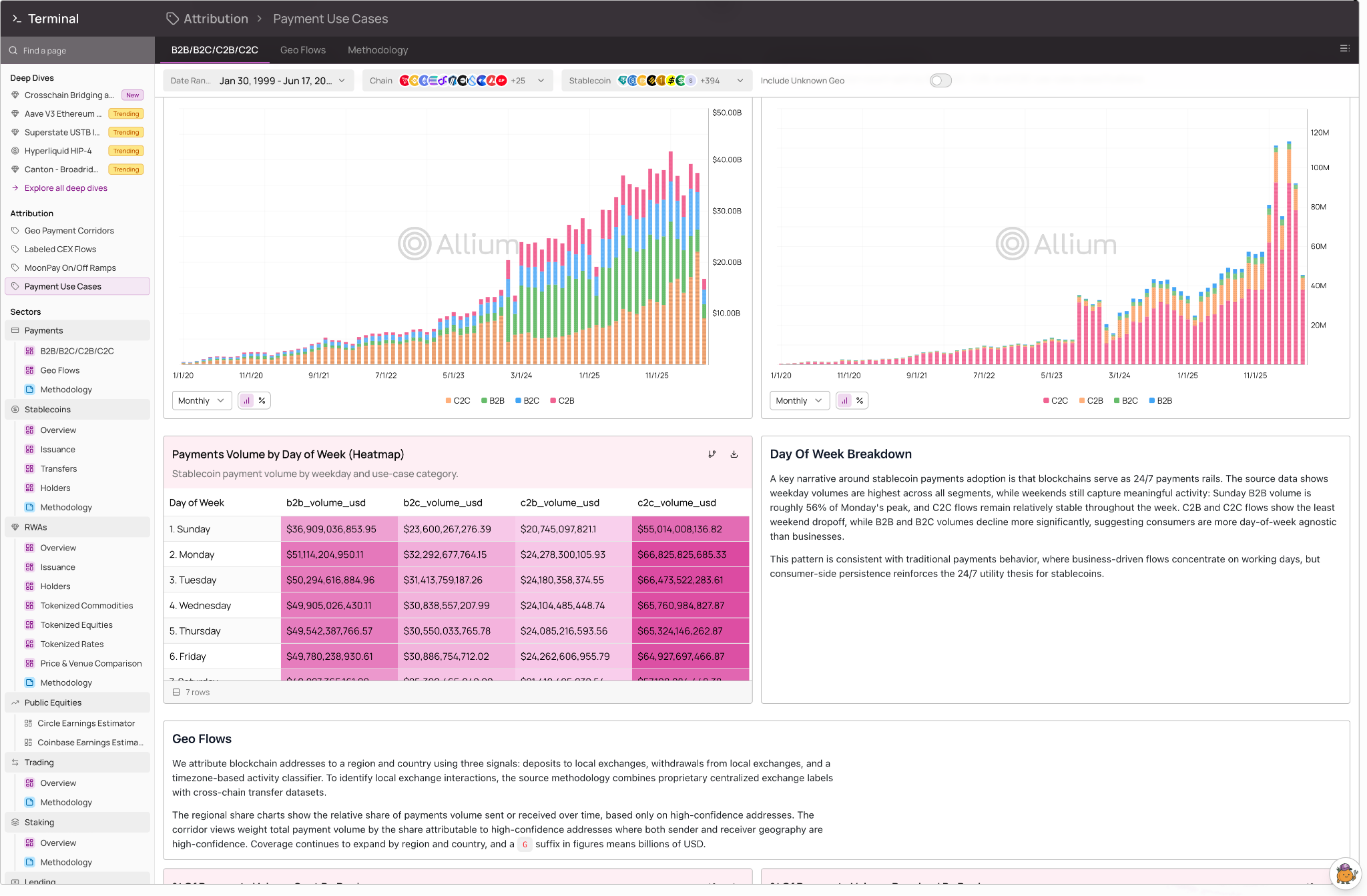
Allium Terminal classifies activity by what people are actually doing onchain, whether that's payments, trading, treasury management, tokenization, or other economic activity.
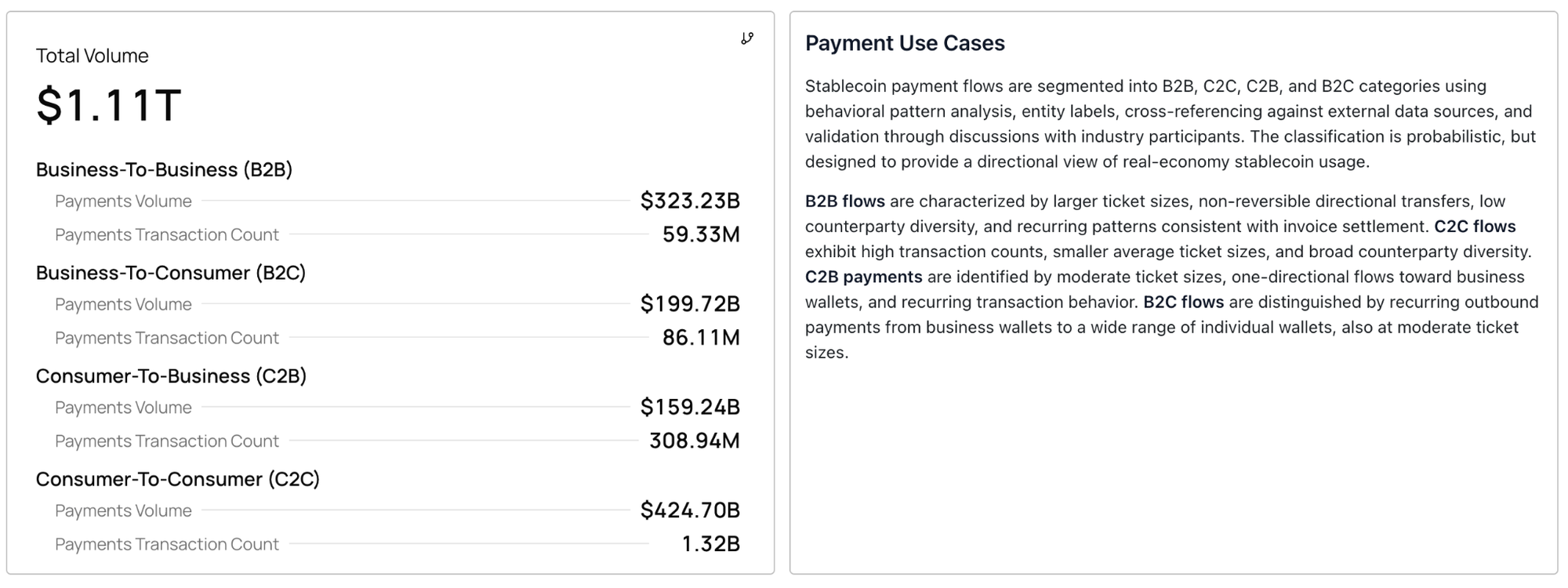
Below is an example of what Allium Terminal can segment — in this case, we’re looking at payment use cases.
Geographic and Entity Attribution
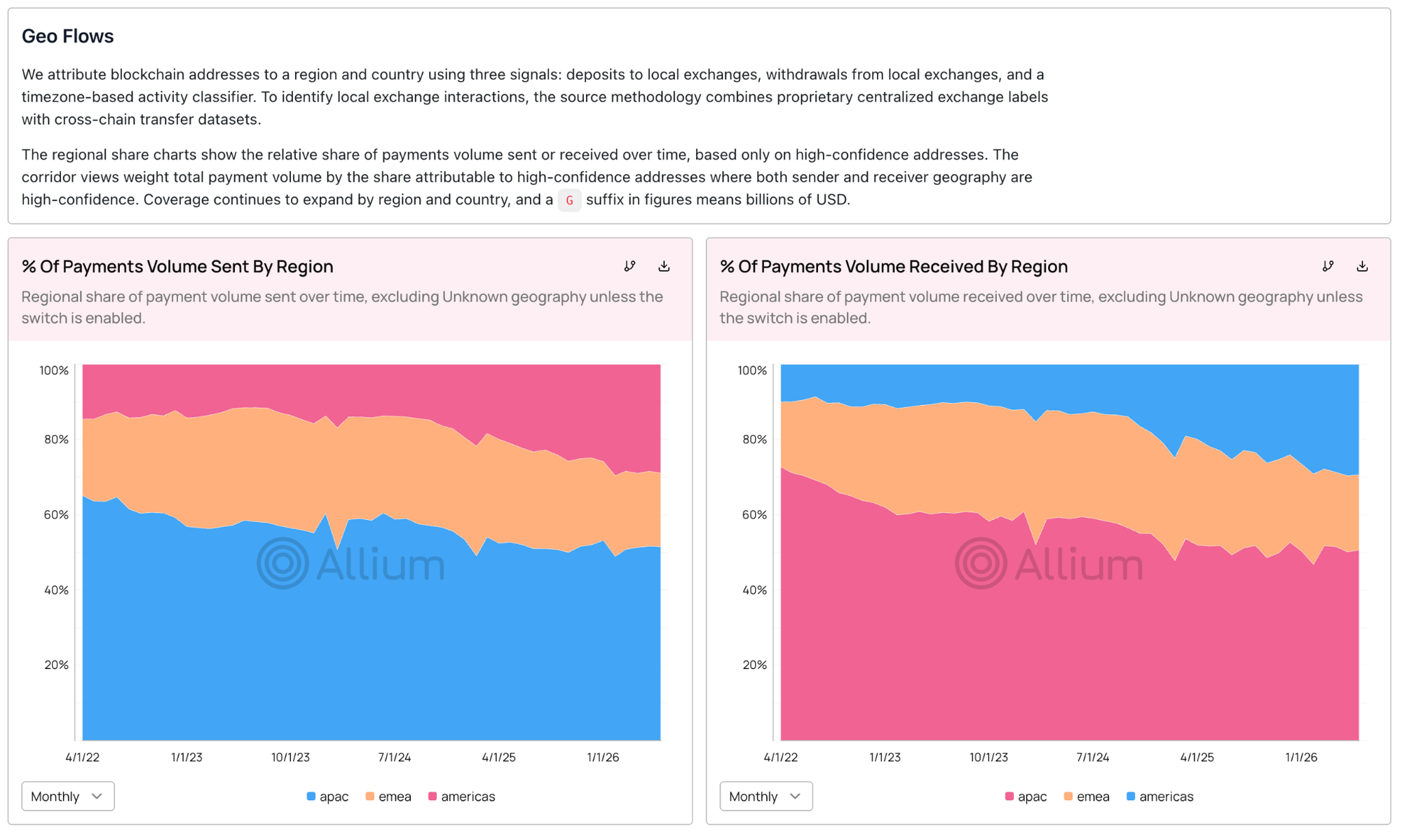
Beyond use case categories, Allium Terminal also provides segmentation by geographic region and entity attribution. Geographic attribution helps organizations identify where adoption is happening and which companies and markets are driving that growth.
In this example below, we’re looking at geographic flows of payments, including all Allium-tracked chains and stablecoins.
Ease of Data Access
Allium Terminal is built on the same underlying data infrastructure as Allium's APIs, SQL environment, and data delivery products. Users can explore a metric in the Terminal, integrate it into an application through an API, or access it directly in their warehouse without rebuilding workflows or reconciling multiple data sources.
What Can You Analyze With Allium Terminal?
Allium Terminal allows you to customize what data you can see for almost any type of analytical need.
Stablecoin Analytics
Stablecoin data tracking is one of the most robust offerings on Allium Terminal. Users are able to see an overview of the stablecoin market at a glance, as well as more granular data like adjusted transfer count, CEX holdings, and the circling supply of every tracked stablecoin.
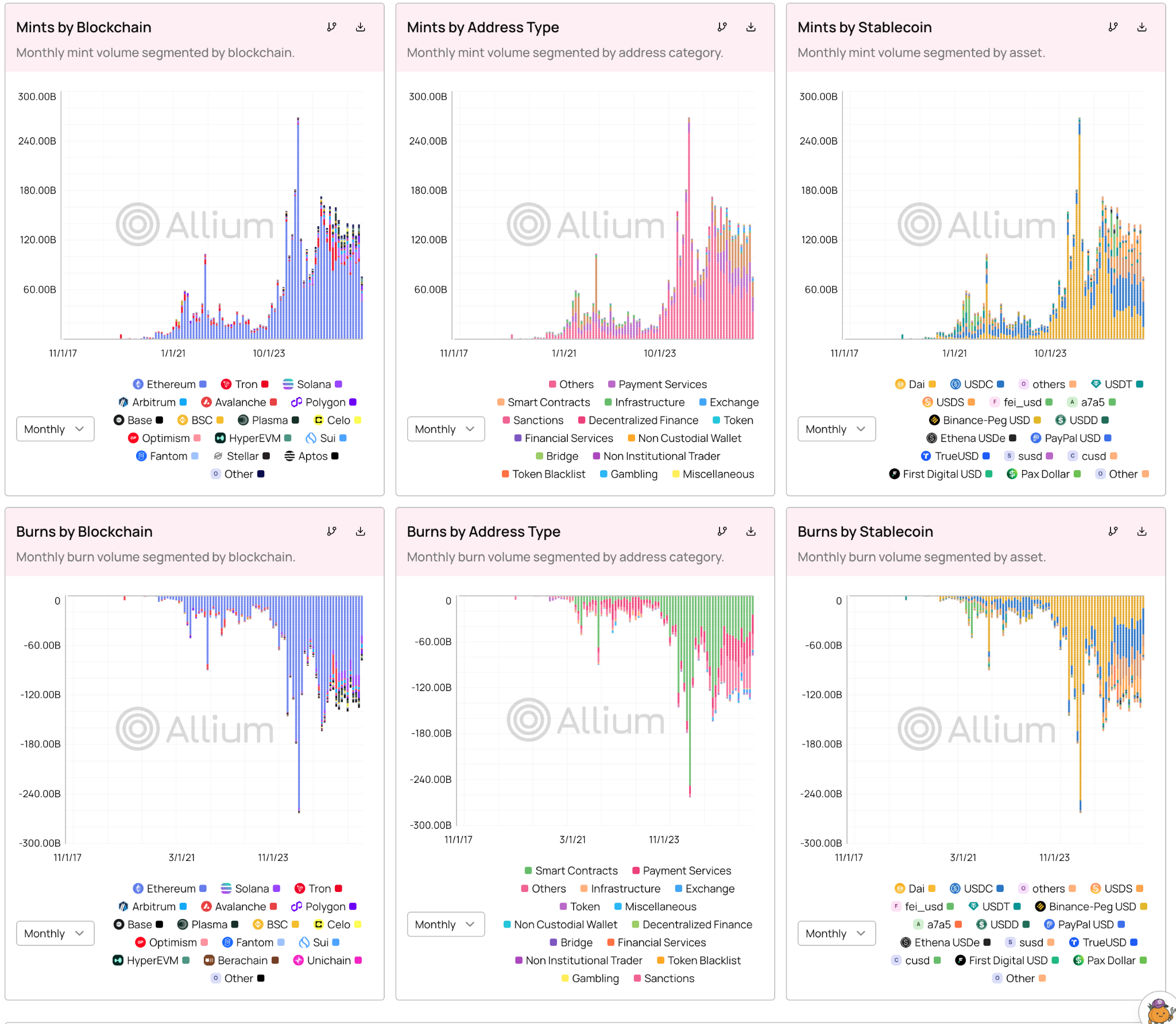
The stablecoin issuance section allows users to see the mints and burns by address type, blockchain, or stablecoin itself.
This isn’t a comprehensive list of all stablecoin data on Allium Terminal: for more information about what Terminal offers, you can book a demo with Allium.
Payment and Trading Analytics
We already touched on some of the payment data available on Allium Terminal, but there is more information beyond payment use cases.
Payments teams can answer questions such as:
- Is growth driven by businesses or consumers?
- Which payment flows dominate?
- How does activity change throughout the week?
- Which payment behaviors are growing fastest?
Those interested in trading data are able to see metrics across 13 tracked tokens: BTC, WBTC, ETH, SOL, BNB, TRX, HASH, APT, CC, ARB, POL, ZK, and Swapbased. Segments within the trading section include a breakdown of market structure, analysis of trading venues, and a volume vs price analysis.
Emerging Onchain Markets
Blockchain adoption extends well beyond payments and stablecoins.
Allium Terminal also tracks emerging sectors including tokenized assets and prediction markets, helping organizations understand where onchain finance is evolving next.
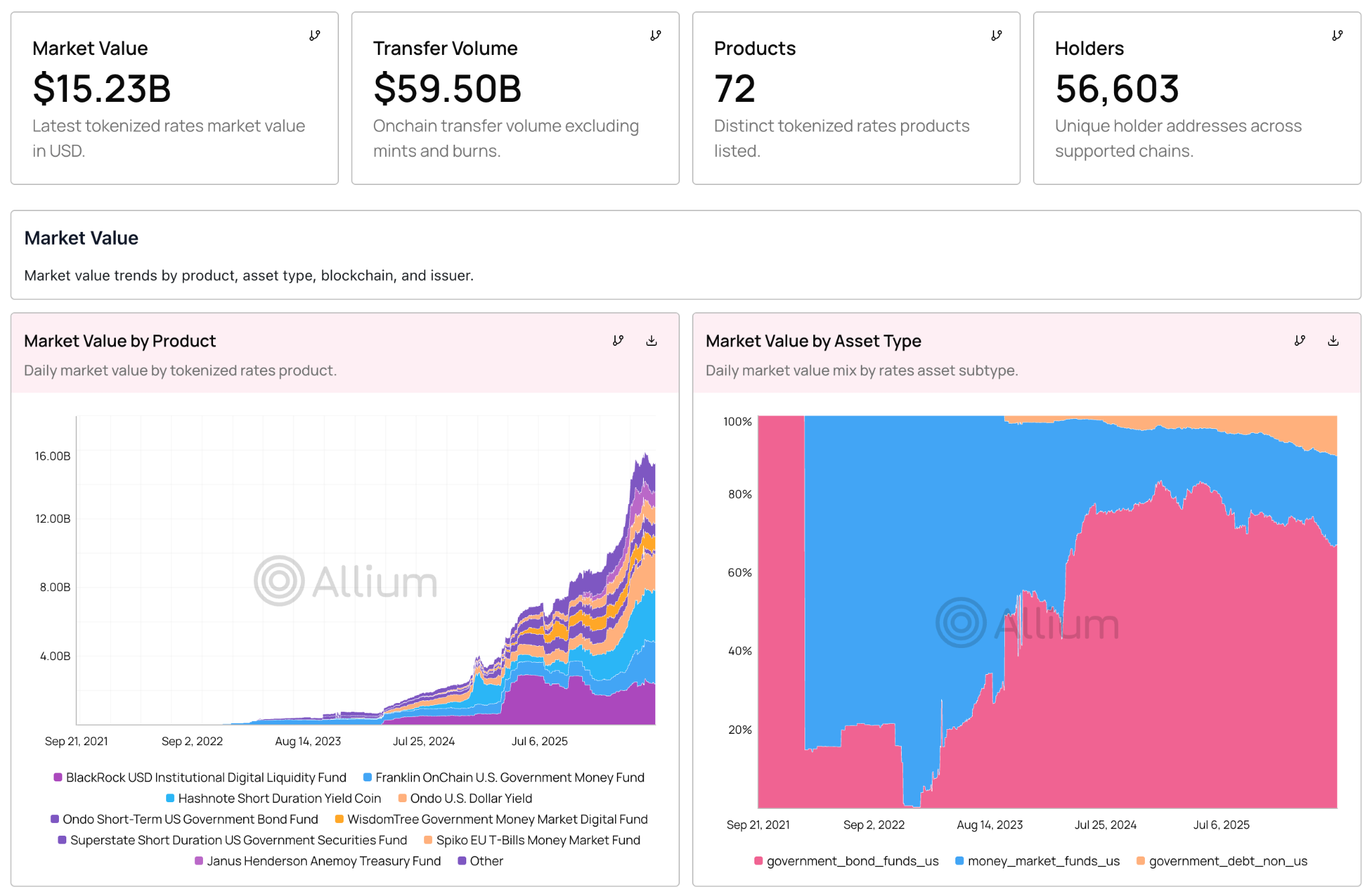
In the RWA section of Allium Terminal, users can see a data breakdown by tokenization commodities, equities, and rates. The RWA overview also breaks down the data into perpetuals and DeFi separately.
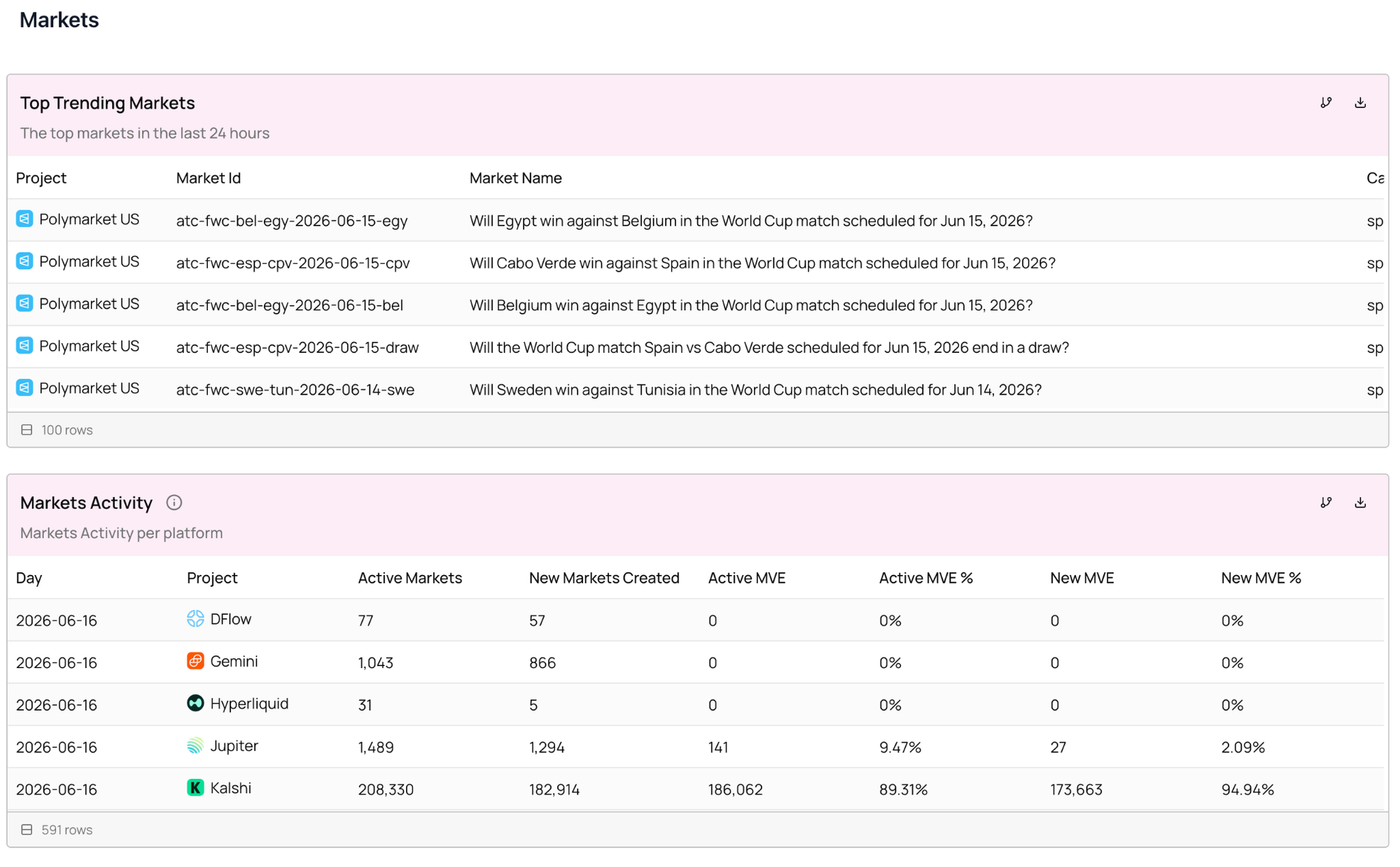
Allium Terminal provides data into six different prediction market venues as well. The Terminal breaks down the trending markets and volume by venue.
Allium Terminal vs Traditional Onchain Analytics Platforms
Allium Terminal is designed to add an additional layer of context to blockchain data. While traditional analytics platforms focus on measuring blockchain activity, Allium Terminal focuses on actually answering data questions.
FAQs About Allium Terminal
How is Allium Terminal different from blockchain explorers?
Blockchain explorers are designed to investigate individual transactions, wallets, and smart contracts. Allium Terminal focuses on higher-level analytics, helping users understand adoption trends, economic activity, payment flows, and other patterns across blockchain ecosystems.
Can I access the underlying data on Allium Terminal?
Yes, you can access the underlying Terminal data through APIs, SQL, data shares, and other delivery methods. This will allow you to move from high-level analytics to deeper investigation when needed.
What blockchains does Allium Terminal support?
Allium supports analytics across more than 150 blockchain networks, including Ethereum, Solana, Base, Tron, and many others, through the same normalized data model used across Terminal, APIs, SQL, and data shares.
Who uses Allium Terminal?
Allium Terminal is used by stablecoin issuers, financial institutions, payments companies, researchers, analysts, and policymakers seeking to understand blockchain adoption and onchain activity.
Is Allium Terminal a blockchain analytics platform or a data provider?
Allium provides both blockchain data infrastructure and analytics products. Allium Terminal is the analytics layer, helping users explore blockchain adoption, payments, stablecoins, and other onchain markets through ready-to-use intelligence and visualizations.
What metrics are available in Allium Terminal?
Available metrics vary by dataset and use case but include stablecoin supply, payment activity, transaction volume, adoption trends, entity attribution, geographic segmentation, tokenized asset activity, and other blockchain analytics.
How does Allium classify stablecoin payments?
Allium uses methodology-driven classification systems to distinguish different forms of stablecoin activity. This helps separate payments from other transaction types and provides a clearer view of how stablecoins are being used across blockchain networks.
From Blockchain Data to Onchain Intelligence
Allium Terminal was built to bridge the gap between blockchain analytics and onchain intelligence.
As stablecoins, payments, tokenized assets, and other onchain markets continue to grow, organizations need a deeper level of blockchain analytics. What’s needed goes beyond surface-level volume and transaction counts, into a wider understanding of the meaning behind that economic activity.
Allium Terminal provides the tools needed to turn blockchain data into meaningful insights.