Making Sense of Onchain Data at Base and Bundlebear
How Kofi Kufuor built Bundlebear into the go-to ERC-4337 dashboard, then brought the same data infrastructure to Base's analytics team.

Onchain analyst Kofi Kufuor (@0xKofi) on building production-grade analytics at Base and Bundlebear
Base is one of the fastest-growing L2s in crypto. Incubated by Coinbase, it serves as the onchain rails for products used by millions—from Base Chain itself to the new Base app. Behind those products is a data team responsible for analytics across the entire ecosystem: monitoring protocol performance, tracking experiments, benchmarking against competitors, and answering questions from product teams shipping fast.
Kofi Kufuor is a Senior Data Scientist at Base. Before joining Base in early 2024, he spent years as an independent onchain data analyst, building tools like Bundlebear—now the go-to dashboard for tracking ERC-4337 smart account adoption across 8 blockchains, including Ethereum, BSC, Base and Optimism.
Here’s how Kofi built Bundlebear’s cross-chain ERC-4337 insights, how the Base data team approaches onchain analytics, and the infrastructure decisions behind both.
Bundlebear: Building cross-chain visibility for ERC-4337 adoption
When Ethereum's core developers launched ERC-4337, it created a new primitive—smart accounts with features like gas abstraction, transaction batching, and social recovery. But there was no good way to track adoption. The data was scattered across chains, and existing tools couldn't surface the metrics that mattered.
Kofi built Bundlebear to fill that gap. The dashboard answers questions like:
- How many smart accounts have been deployed this month?
- Which bundlers and paymasters are gaining share?
- How does adoption on Base compare to Arbitrum or Polygon?
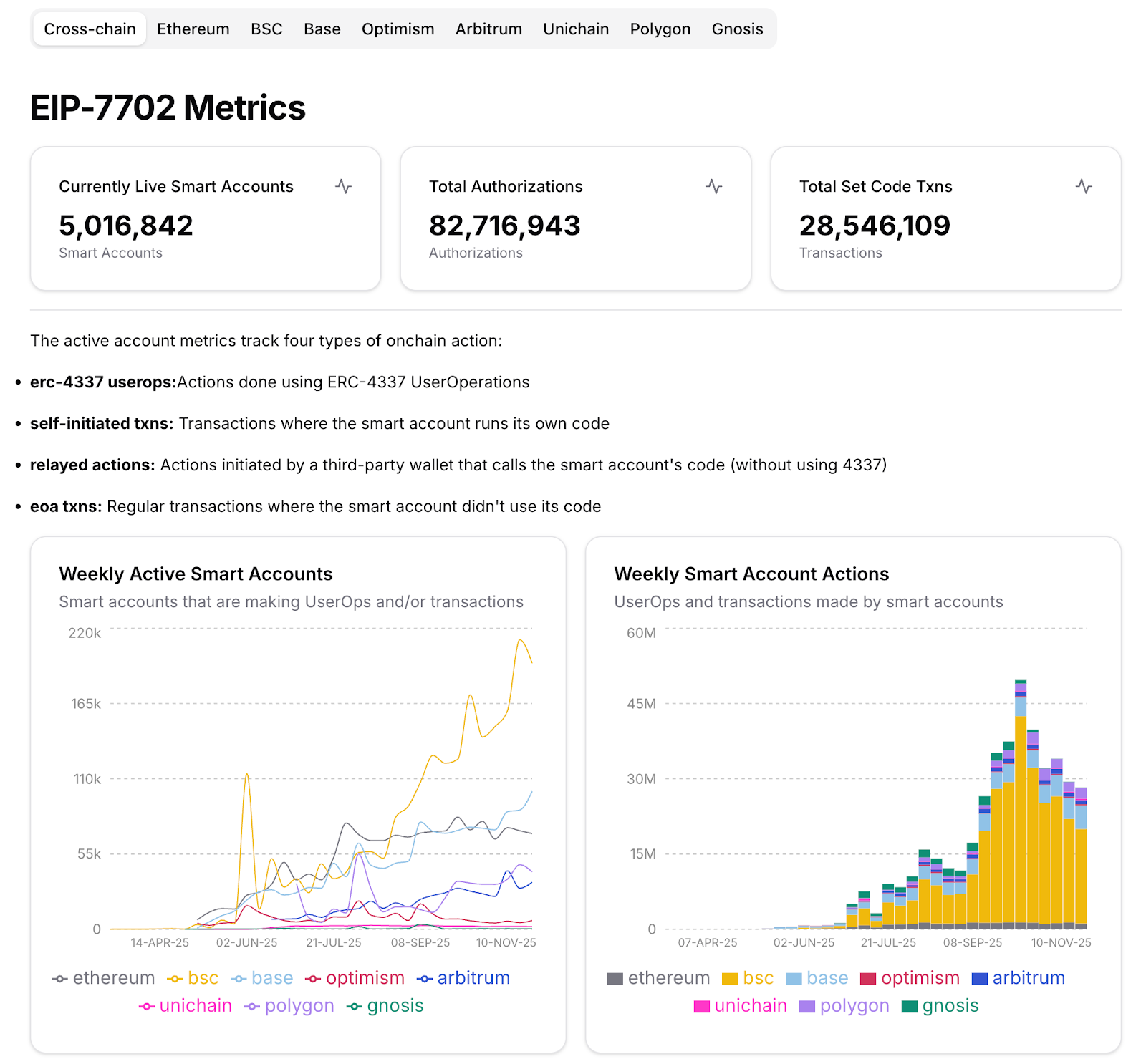
Users can filter by chain and time frame, and everything loads fast—no waiting on slow API calls or query timeouts.
"I wanted to have all of the insights done my own way—the theming, the styling, the ability to click between different chains and time frames. Having the flexibility to build on my own site with my own data environment was what I was looking for." — Kofi Kufuor
Bundlebear’s data architecture, built on Allium:
1. Blockchain data lands in Snowflake
Decoded transactions and events are shared directly into Bundlebear’s own Snowflake instance.
2. dbt transforms raw data into metrics
A dbt project handles the transformation layer, turning raw blockchain data into the specific metrics Bundlebear surfaces.
3. The frontend reads from pre-built tables
The site queries Snowflake directly. Pages load fast because the heavy lifting is already done.
This setup gave Kofi full control. He owns the schema, sets his own limits (none), and queries as much as he needs. The only constraint is Snowflake compute, which was cost effective vs API credits.
"Before, I'd burn through all my API credits in a day, or every call would take forever. I just wanted the data in my own environment where I could query as much as I wanted." — Kofi Kufuor
Data Science at Base: Serving data needs across the ecosystem
Base's data team supports product stakeholders across multiple Base products:
- Base Chain—protocol metrics, gas usage, sequencer performance
- Base App—user behavior, transaction patterns, feature adoption
- Growth and partnerships—campaign tracking, ecosystem benchmarking, competitive analysis
- Base Build—developer tool usage, top apps, growth accounting
The team has grown quickly, and half of the team members work regularly with onchain data. They need to move fast as Base scales—answering questions from product teams, monitoring launches, running experiments.
"There's a lot of different people who need a lot of different stuff. Product teams working on their own products inside of Base, all with different needs around monitoring, campaigns, experiments, and benchmarking against competitors." — Kofi Kufuor
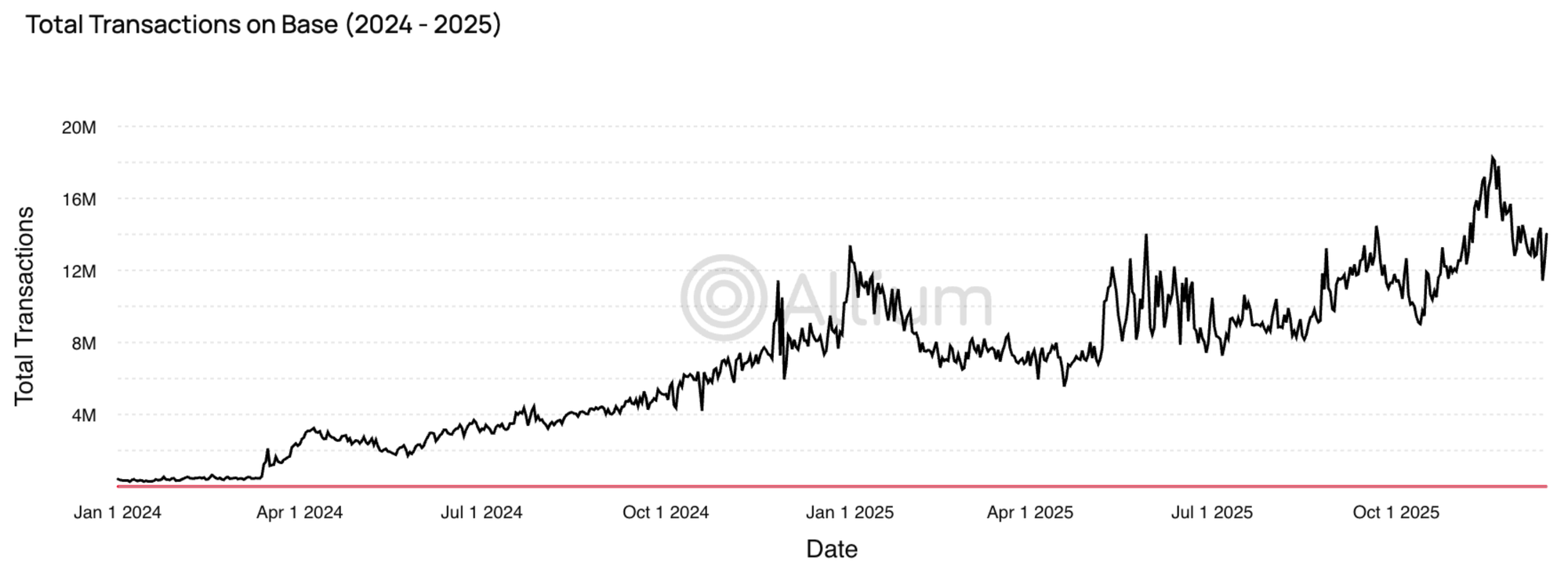
How Allium fits into Base's data stack
Base moves fast, and the data team needs to keep pace. Allium saves time by providing complex, industry-standard datasets—like DEX trades, token transfers, and address labels—so the team doesn't need to build and maintain them from scratch.
The setup is similar to Bundlebear: Allium shares raw and decoded blockchain data directly into Snowflake, where the team can query it without rate limits or API dependencies.
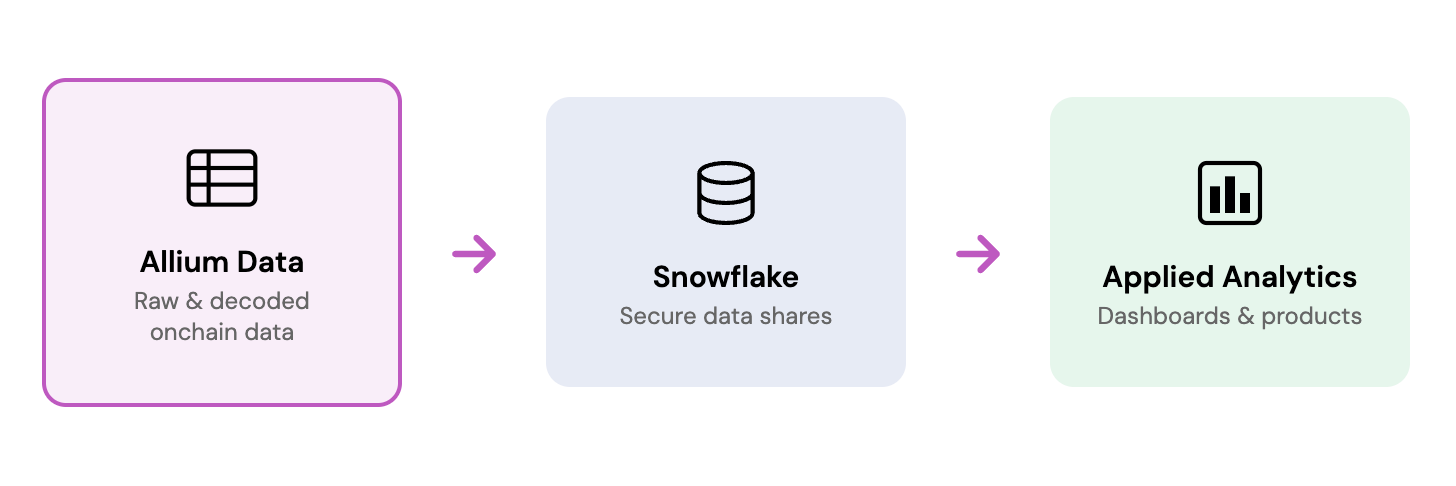
When Kofi needed EIP-7702 authorization data added to the transactions table, Allium shipped it within days.
"Allium responds to requests and feedback faster than any data provider out there." — Kofi Kufuor
When to graduate from exploratory tools to production-grade data
"Exploratory tools are great for getting started. But eventually you hit a point where you want to do something that's just too hard to do with them. That's when you need to graduate to something more flexible." — Kofi Kufuor
Kofi built Bundlebear on Allium as a side project. It became the default source for ERC-4337 data, and that visibility helped land him a role at Base. Now he's using the same infrastructure—Snowflake data shares, pre-built tables, no rate limits—to ship analytics across the Base ecosystem.
Explore Bundlebear at bundlebear.com. Follow Kofi at @0xKofi.
Building onchain analytics ? Talk to us.