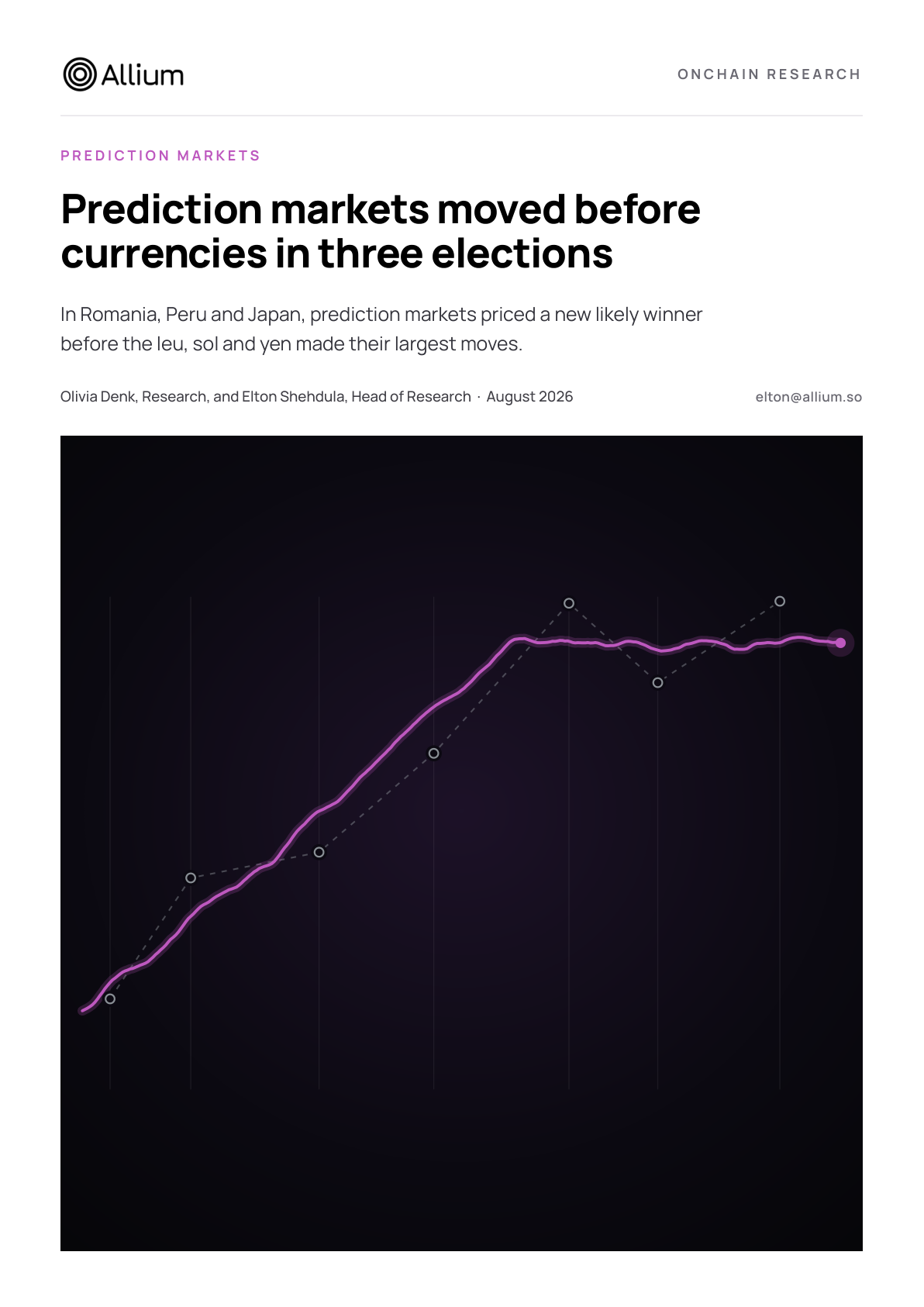
Prediction markets moved before currencies in three elections
Romania, Peru and Japan: the market priced the winner before the leu, sol and yen moved.
Election markets and currency markets price the same political event on different clocks. This report follows Romania, Peru and Japan, where Polymarket and Kalshi moved to a new likely winner before the related currency made its larger election-period move. By Olivia Denk, Research @Allium; Elton Shehdula, Head of Research @Allium
Election markets can trade through the moments when political risk is being decided. Currency markets keep hours, and the currency move tied to an election can take days to finish.
This report follows three elections where Polymarket and Kalshi priced a new likely winner before the related currency made its larger move.
In Romania, prediction markets shifted toward George Simion, the hard-right and EU-sceptic challenger, during the first-round vote count on May 4, 2025, before the leu weakened. In Peru, Keiko Fujimori became the prediction-market favorite on April 4, 2026, eight days before the vote, while the sol's larger move came after the count confirmed the result. In Japan, Sanae Takaichi became the likely next prime minister over the weekend of October 4, 2025, while yen trading was closed.
Three elections cannot establish a general rule, but in each of them prediction markets priced the political change first and currency markets took days to finish adjusting.
Figures come from Allium data across Polymarket and Kalshi, queried in August 2026, with currency levels from public benchmark data.
Informational only. Not investment advice.
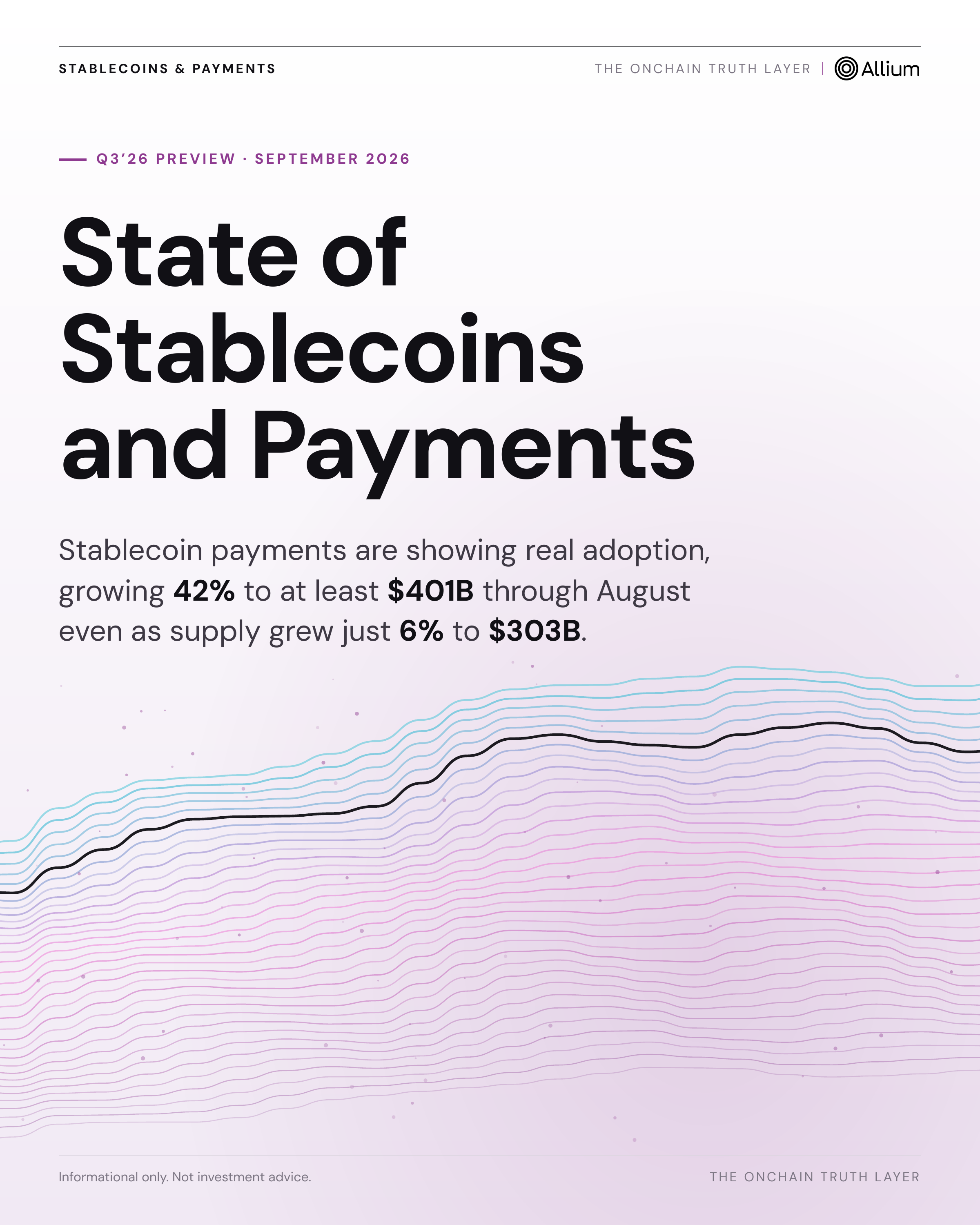
State of Stablecoins and Payments: September 2026
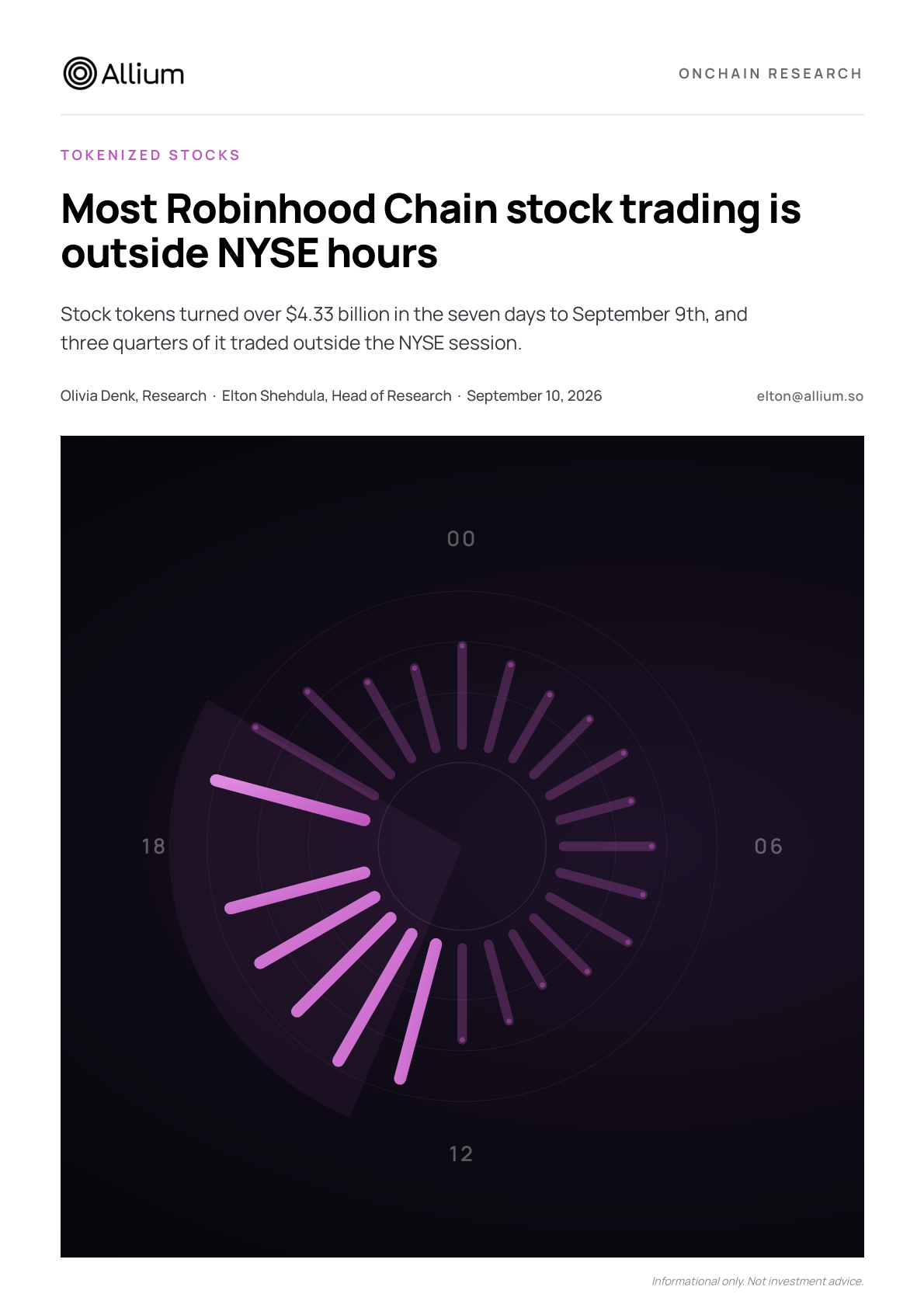
Most Robinhood Chain stock trading is outside NYSE hours
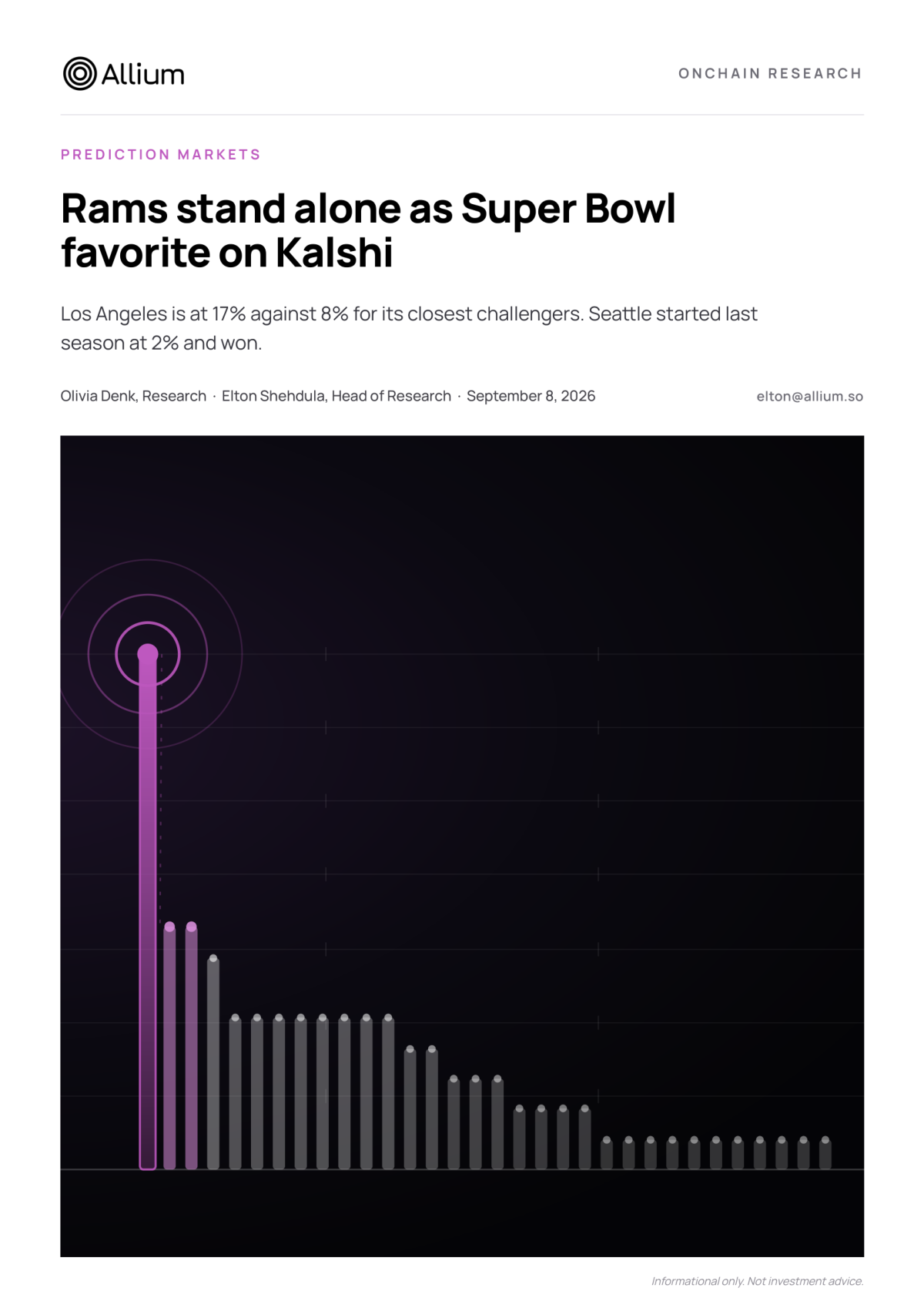
A year ago the Super Bowl favorite was priced at 2%
Solana runs 47% of onchain RWA trades
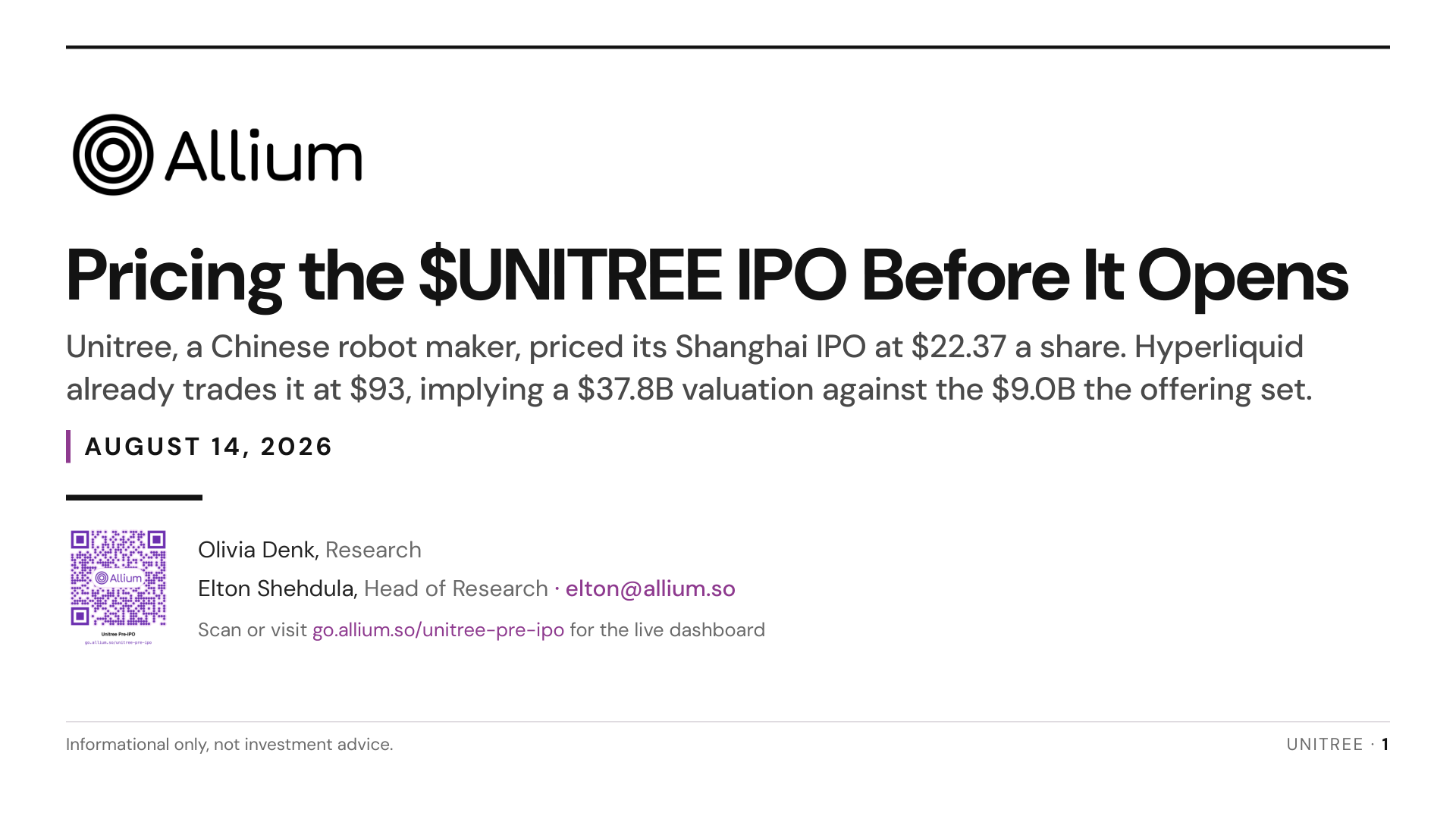
A live market prices Unitree at 4.2x its IPO
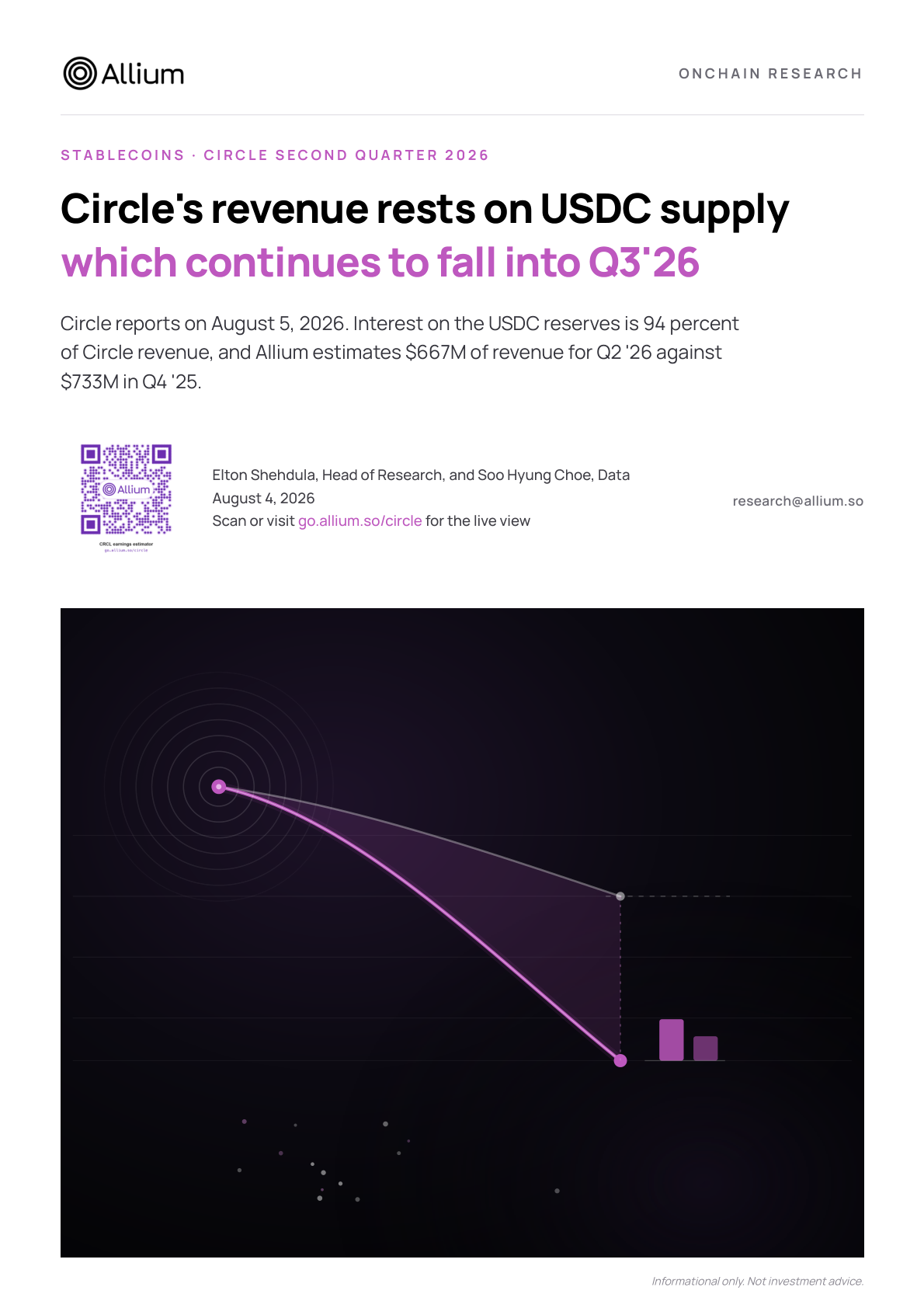
Circle's revenue tracks USDC supply, and supply is falling
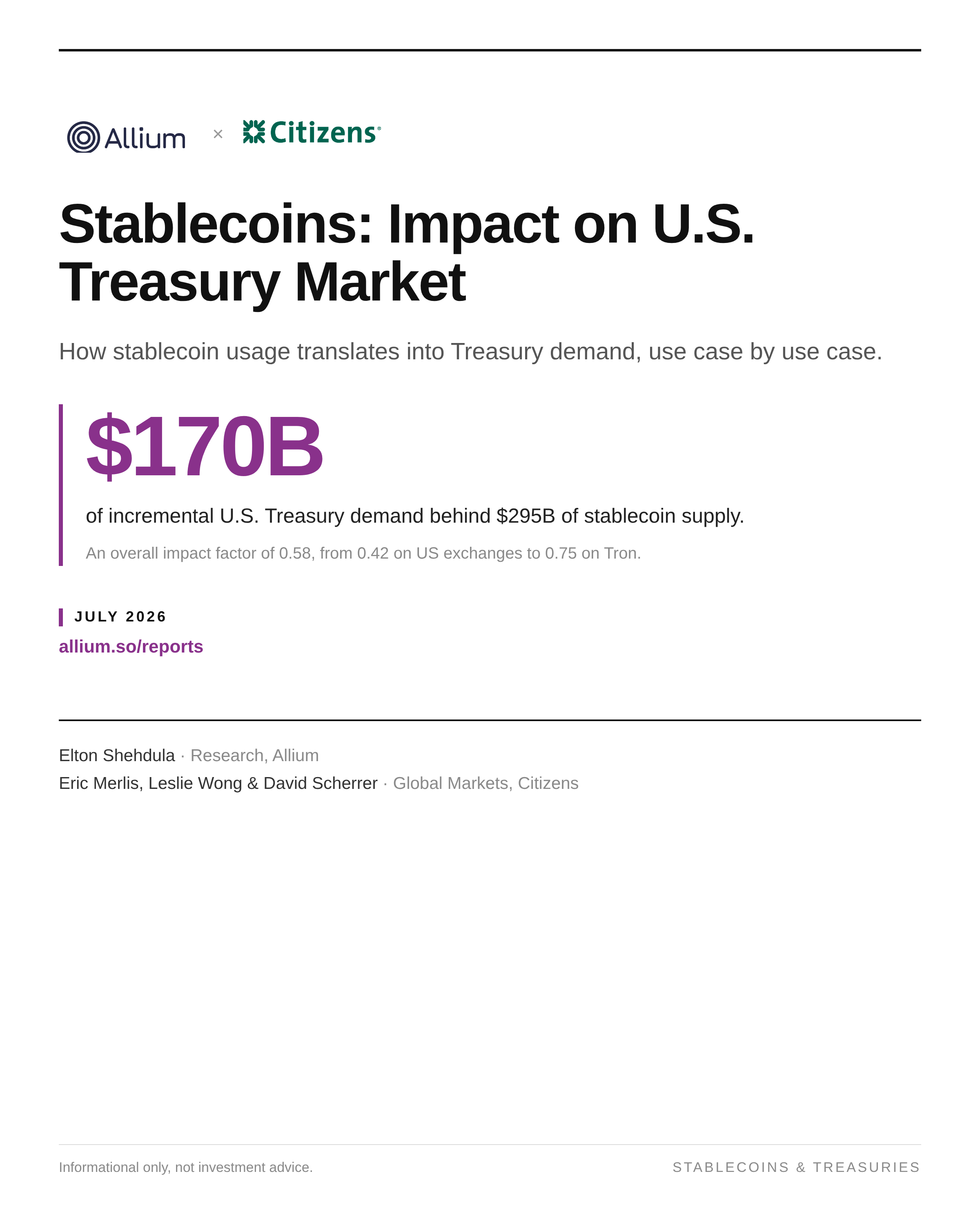
Stablecoins add $170B of genuinely new Treasury demand
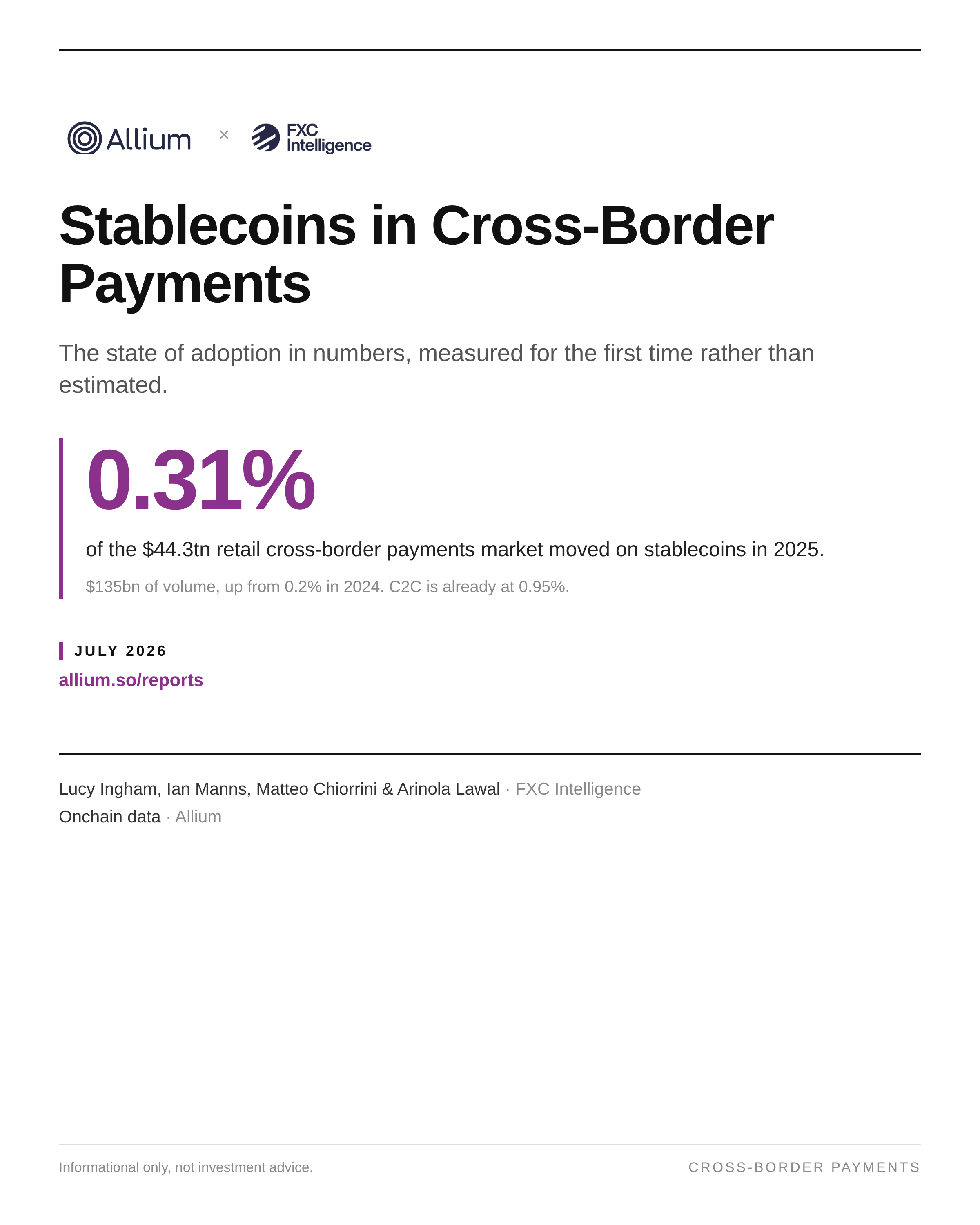
Stablecoins are 0.31% of cross-border payments
Polymarket and Kalshi now predict future GPU rental prices
Onchain: The New Alternative Alpha
A live market priced CXMT's 472% IPO pop before Shanghai opened

Gain exposure to Anthropic and OpenAI before the IPO

Binance outflows shifted to self-custody into the MiCA deadline
The most expensive long onchain is a crowded bet on SK Hynix
Nvidia holds 74% of the odds on a $600B lead
State of Onchain Finance Q2 2026
Prediction markets price the Fed almost exactly like Wall Street
Three onchain venues priced SpaceX within 19% of its open
.webp)
Polymarket's World Cup markets have taken $98M
ZEC fell 64%, and the selling started before the bug was found
Tokenized US funds hold $14.2B onchain
Tokenized equities reached $3.3B onchain
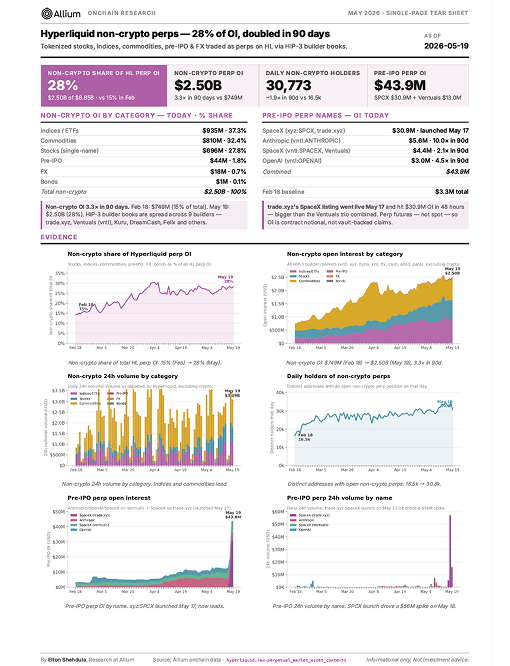
Non-crypto perps were 28% of Hyperliquid open interest in May
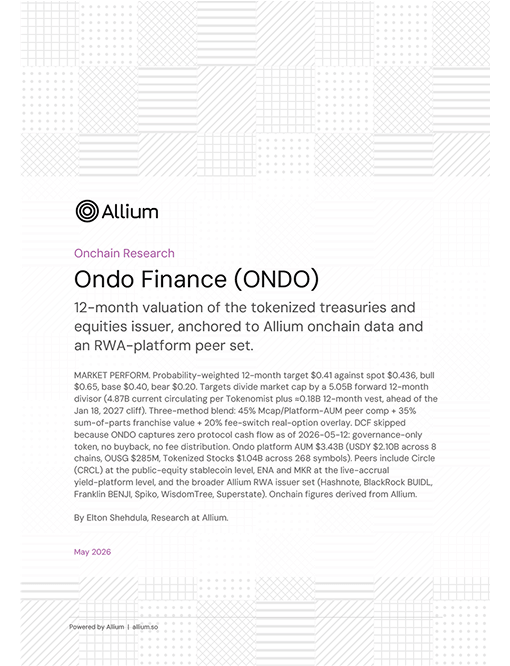
Ondo is the only large RWA issuer with a public token
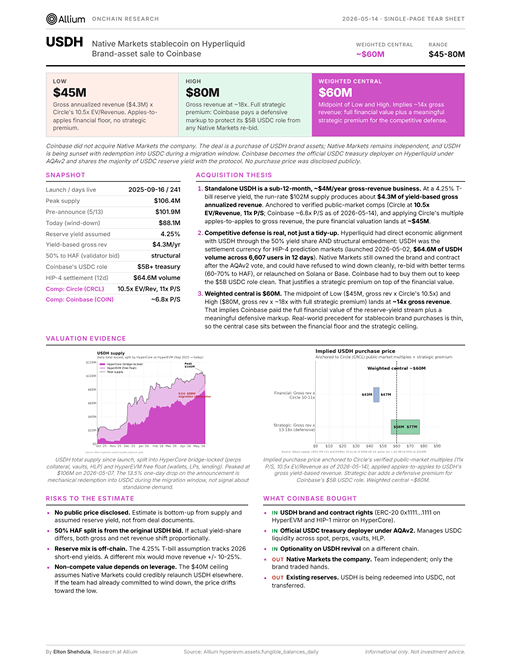
USDH: What Coinbase Actually Bought
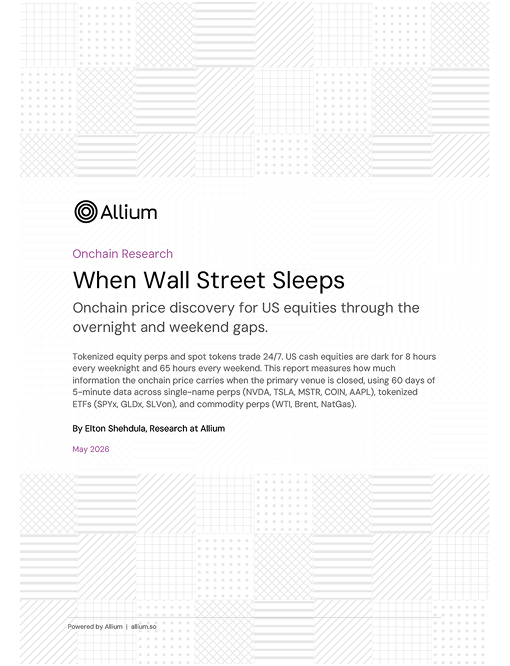
Onchain perps carry real price signal while US equities are dark
Hyperliquid runs about 70% of onchain perp volume
Five years of BENJI, the first US-registered fund onchain

1% of wallets generate 65% of prediction market volume

Stellar settles at the scale of a regional payment network
Tokenized Equities: Market Adoption and Trading Dynamics
Stablecoins: The emergence of a new payment rail
Onchain Execution: How Institutions Are Trading in DeFi Markets
Stablecoin Payments: The Truth Behind the Numbers

In the Shadow of Bank Runs: Lessons from the Silicon Valley Bank Failure and Its Impact on Stablecoins
Cross-Chain Arbitrage: The Next Frontier of MEV in Decentralized Finance
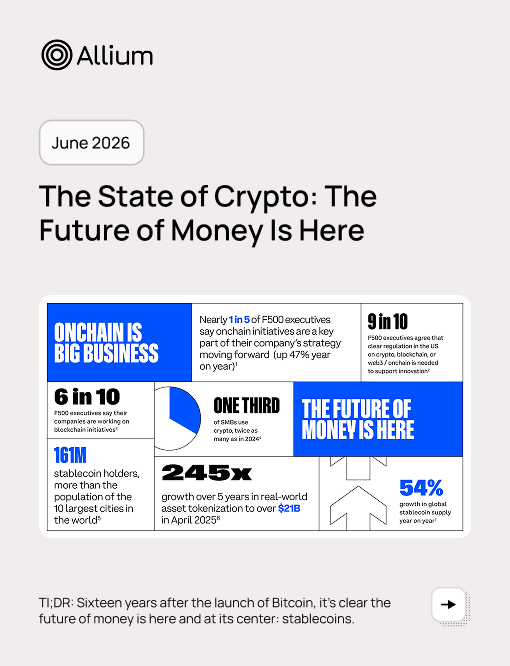
The State of Crypto: The Future of Money Is Here
Stablecoins: Five killer tests to gauge their potential
Onchain Trading Data Gaps: Risks for Crypto Market Oversight
On-Chain Analysis of Smart Contract Dependency Risks on Ethereum
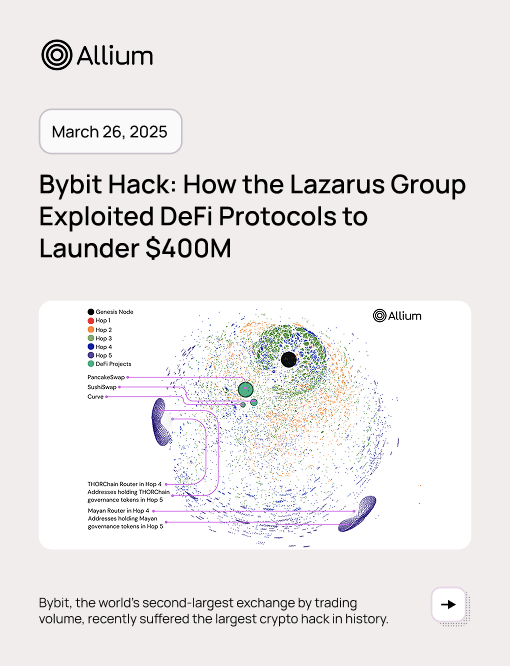
Bybit Hack: How the Lazarus Group Exploited DeFi Protocols to Launder $400M
Game Theoretic Liquidity Provisioning in Concentrated Liquidity Market Makers

Algorithmic Techniques for Utility Improvement Across the Blockchain Stack
Finance is moving onchain. Allium is the system of record it runs on.