Stablecoins: Impact on U.S. Treasury Market
Understanding How Stablecoin Usage Translates into Treasury Demand
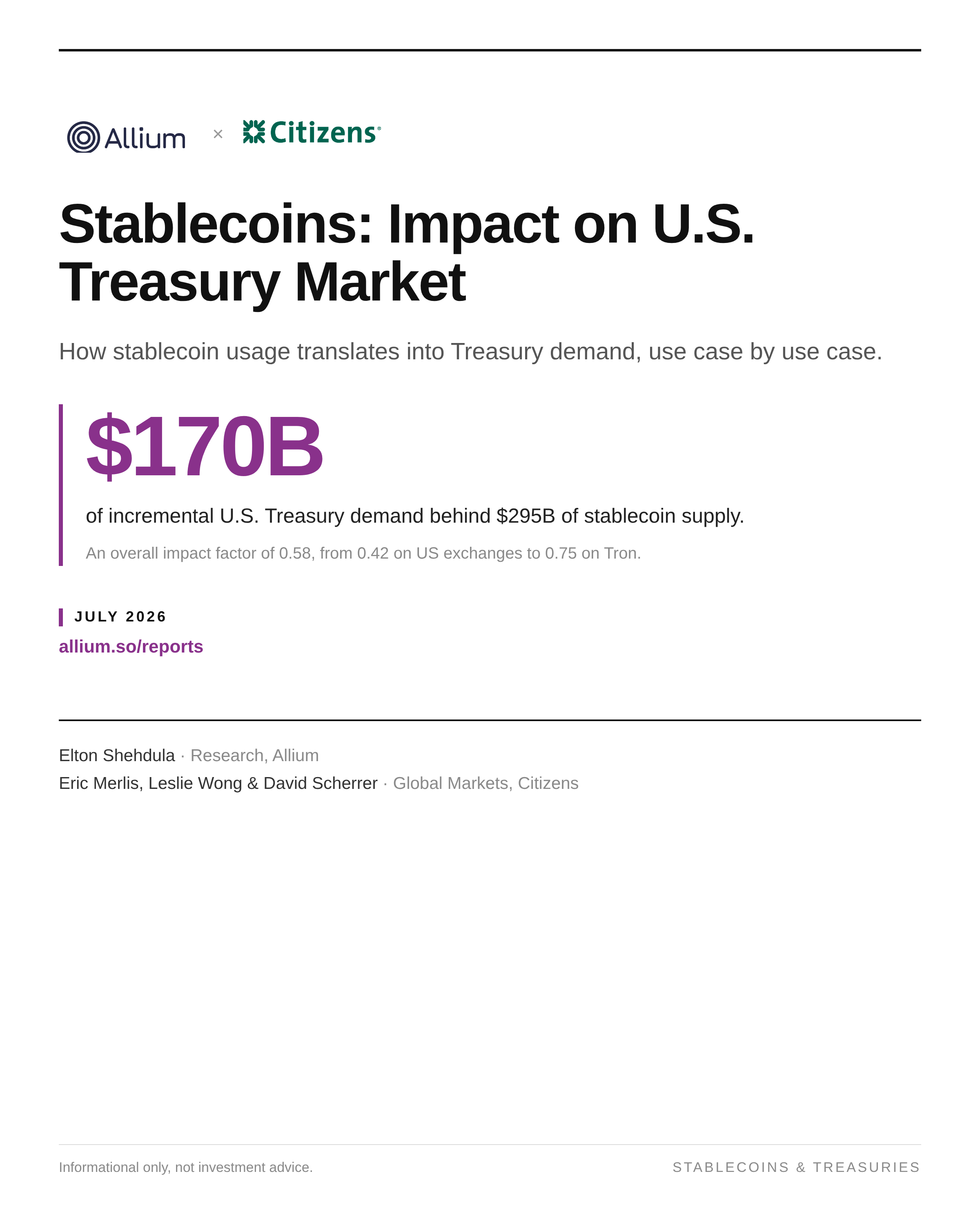
Stablecoin reserves sit in short-dated Treasury bills and Treasury repo, so supply growth is often read as a straight line to Treasury demand. This joint white paper with Citizens classifies roughly $295 billion of stablecoin supply by how it is actually used and finds an estimated $170 billion of genuinely incremental U.S. Treasury demand behind it. By Elton Shehdula, Research @Allium Eric Merlis, Leslie Wong & David Scherrer, Global Markets @Citizens
Key takeaways
- Roughly $295 billion of stablecoin supply supports an estimated $170 billion of incremental U.S. Treasury demand. Headline issuance overstates the pass-through, because part of that supply replaces instruments that already hold Treasuries. Sizing the Treasury impact means separating gross supply from net new demand.
- Use cases decide whether stablecoin demand is substitutive or incremental. Yield-bearing balances held on U.S. exchanges behave like bank deposits or money market fund sweeps and carry the lowest Treasury impact factor in the analysis, 0.42. Payments, DeFi infrastructure and dollar savings by non-U.S. users generate the most durable new demand, led by payment-driven usage on Tron at 0.75.
- Stablecoins function as dollar infrastructure, not only as reserve-backed assets inside the crypto economy. As institutional adoption accelerates and regulation settles under the GENIUS Act, stablecoins increasingly serve as settlement, liquidity and funding rails. At the paper's overall impact factor of 0.58, the $3 trillion market Treasury Secretary Scott Bessent estimates stablecoins could reach by 2030 would generate $1.7 trillion of incremental Treasury demand.
Abstract
As stablecoins scale, they are often framed as a direct source of U.S. Treasury demand because their reserves sit in short-dated U.S. Treasury bills and Treasury-collateralized reverse repo. This paper challenges the assumption that supply growth translates mechanically into proportional Treasury purchases. The Treasury impact of stablecoins depends on how they are used as much as on how much is issued.
Using Allium wallet and transaction labeling, the paper classifies stablecoin supply by use case: U.S. and offshore exchanges, consumer wallets on Ethereum, payments on Tron, lending, decentralized exchanges, perpetual futures venues and bridges. Each category carries a Treasury impact factor that reflects reserve composition and how far its balances substitute for money market funds and bank deposits. Balances that recycle existing dollar liquidity, such as yield-bearing holdings on U.S. exchanges, absorb little new Treasury issuance. Uses that expand dollar access in dollar-scarce environments or run onchain financial operations generate genuinely incremental demand.
The framework separates where stablecoins reinforce Treasury demand from where the impact is overstated. Because the dataset is composable, the assumptions can be re-run as regulation, yields and industry structure shift, and as institutions adopt stablecoin infrastructure the balance may tilt further toward substitutive liquidity rather than net new dollar demand.
Download the full paper for the category-level breakdown and methodology.
Informational only. Not investment advice.
State of Stablecoins and Payments: September 2026
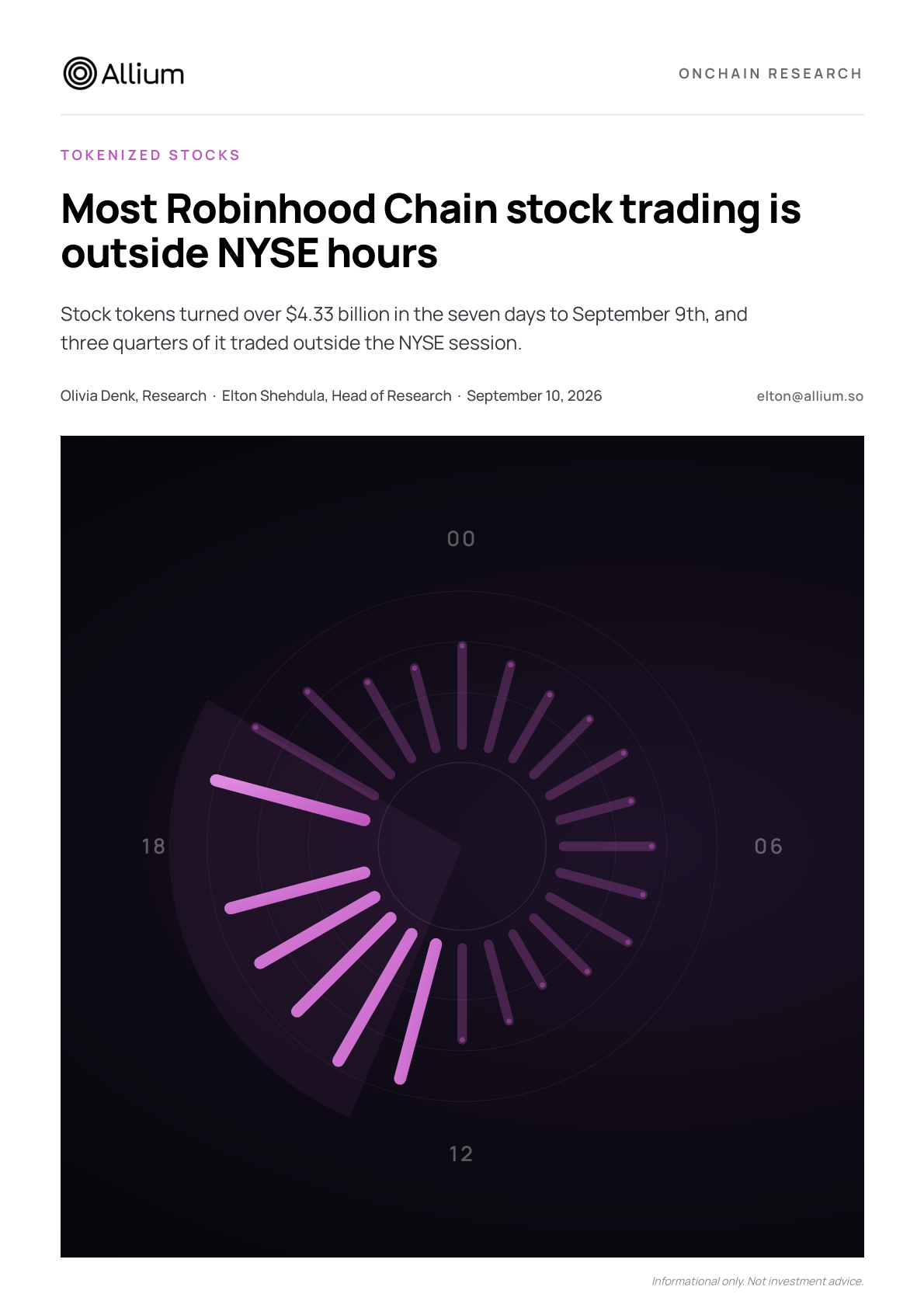
Most Robinhood Chain stock trading is outside NYSE hours
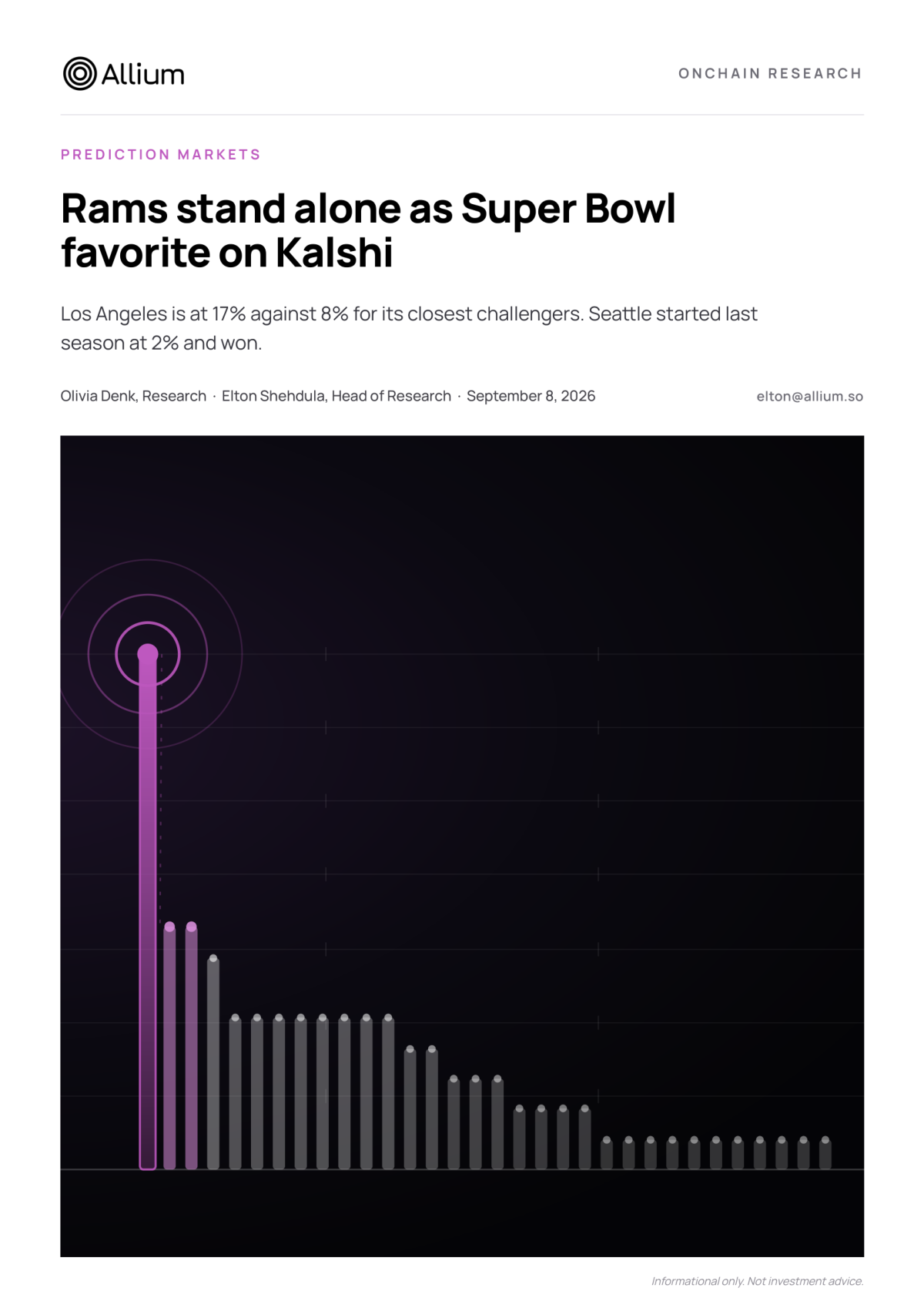
Rams stand alone as Super Bowl favorite on Kalshi
The State of the Solana Real-World Asset Ecosystem: August 2026
Pricing the $UNITREE IPO Before It Opens
Prediction markets moved before currencies in three elections
Circle's revenue rests on USDC supply which continues to fall into Q3'26
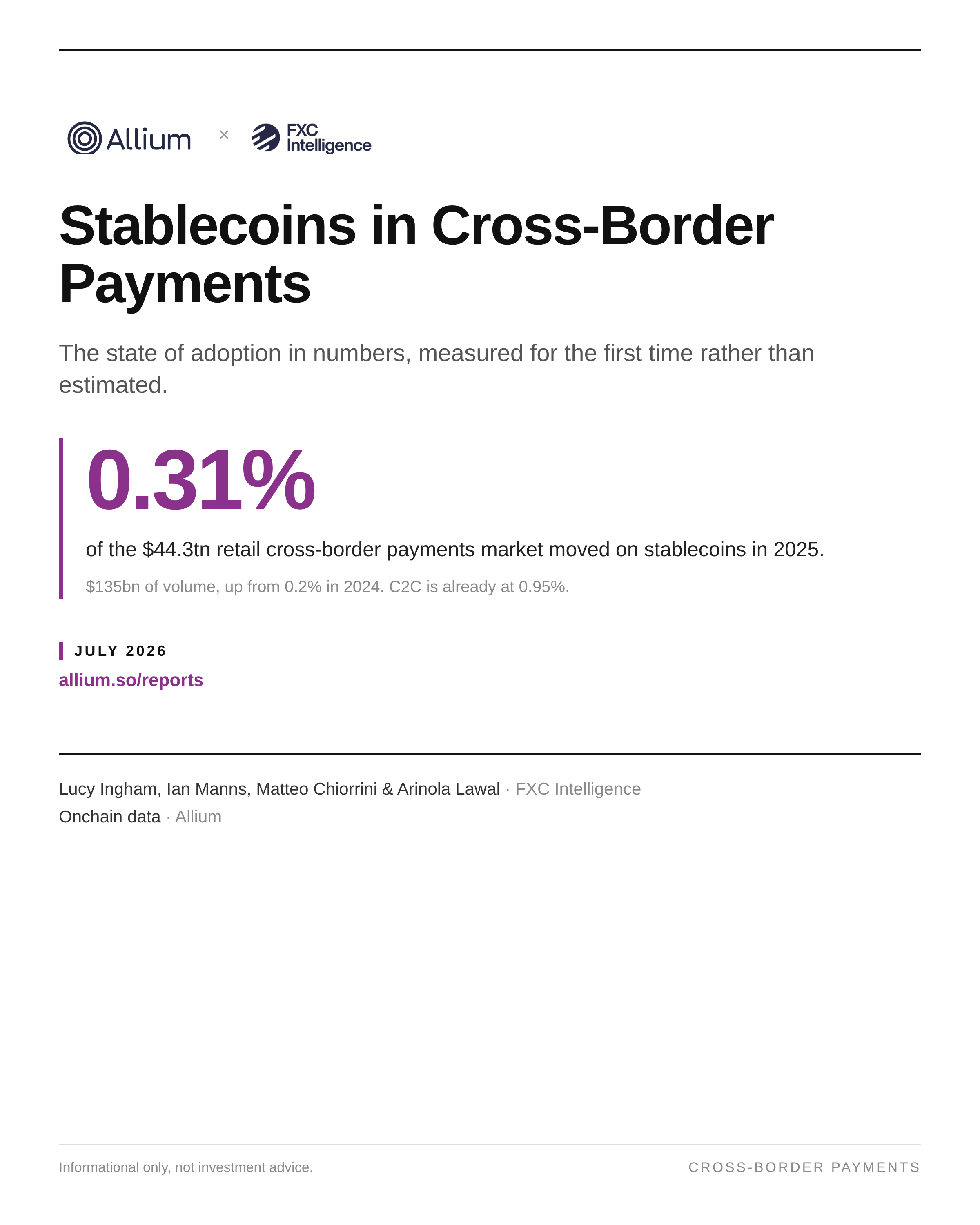
How big is stablecoins' share of the cross-border payments market? The state of adoption in numbers

Polymarket and Kalshi now predict future GPU rental prices
Onchain: The New Alternative Alpha
A live market priced CXMT's 472% IPO pop before Shanghai opened

Gain exposure to Anthropic and OpenAI before the IPO

Binance's outflows shifted further to self-custody into the MiCA deadline
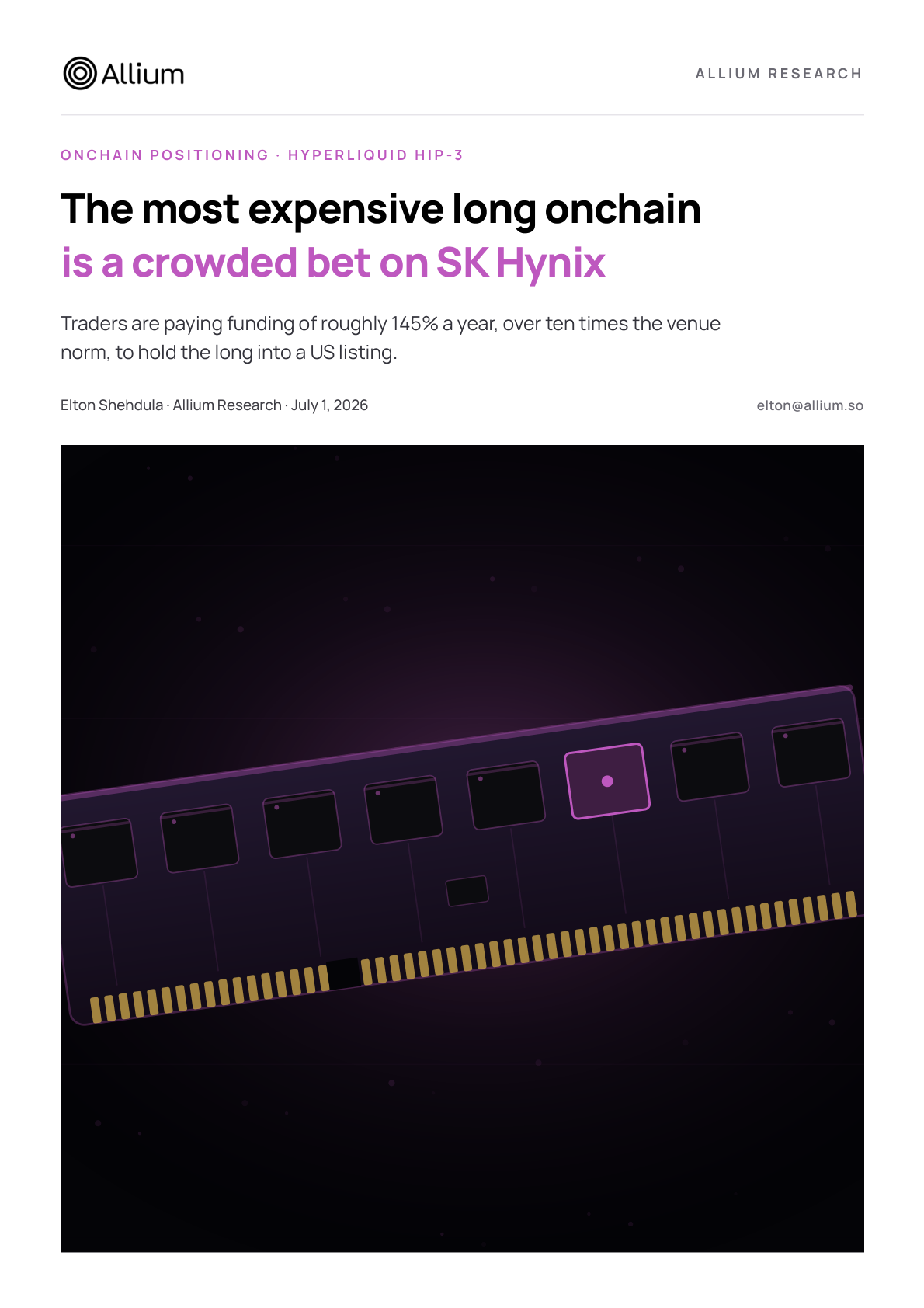
The most expensive long onchain is a crowded bet on SK Hynix

Which Company Will Be the World's Largest by Year-End 2026?
State of Onchain Finance Q2 ’26

Meeting in the Middle
Pricing SpaceX Pre-IPO Onchain
.webp)
World Cup Prediction Markets Geography
A Four-Year Bug, a 64% Crash, and a Question Nobody Can Close
Tokenized US Funds Onchain: $14.2B and Compounding
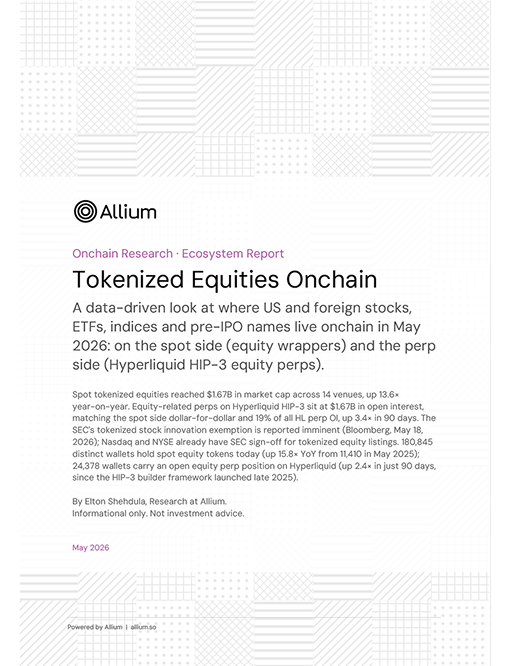
Tokenized Equities Onchain: $3.3B and Growing
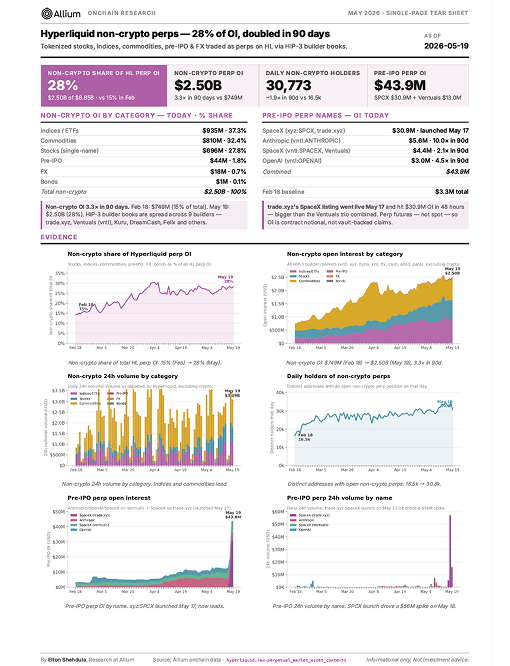
Hyperliquid non-crypto perps
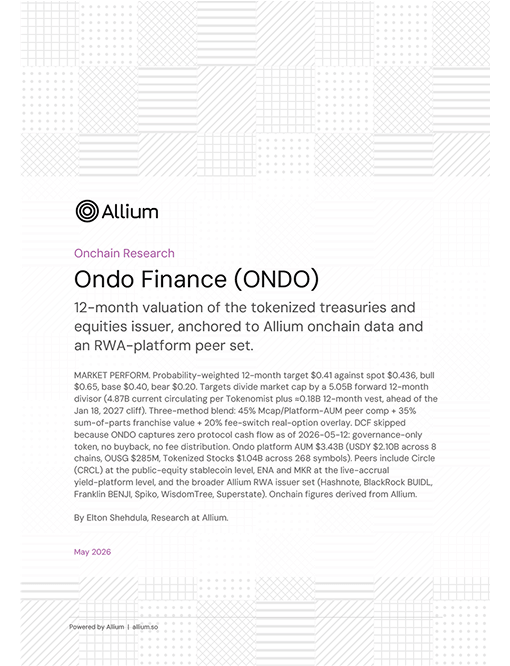
Ondo Finance (ONDO)
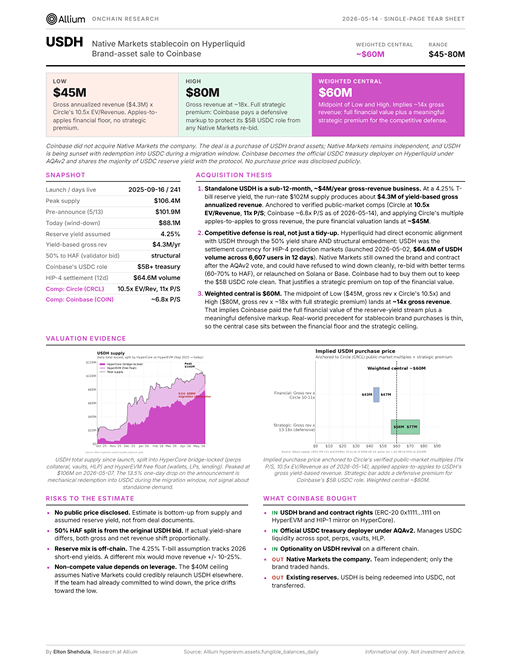
USDH: What Coinbase Actually Bought

When Wall Street Sleeps
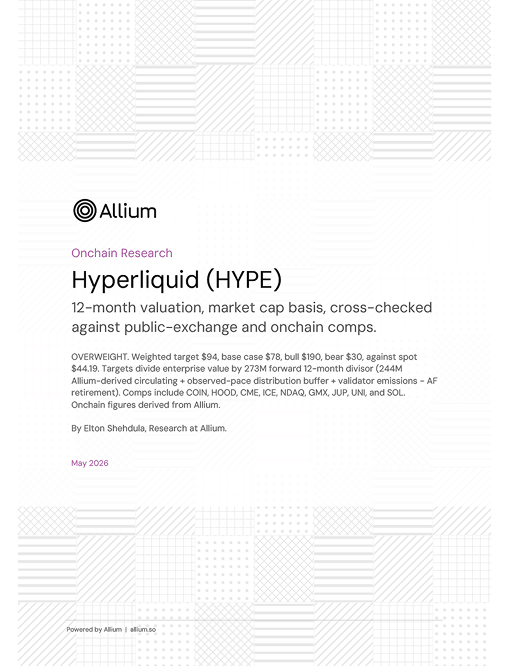
Hyperliquid (HYPE): Onchain Research
Franklin Templeton on Stellar: Onchain Analysis

Prediction Markets: A New Financial Primitive
Stellar: Institutional Infrastructure for Global Settlement and Tokenized Assets
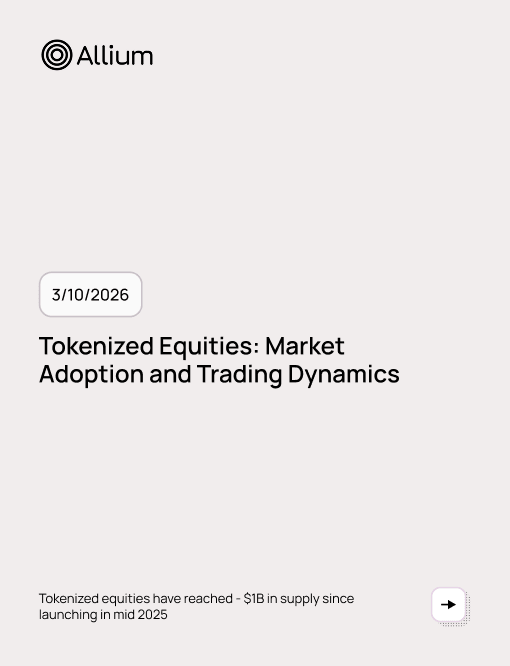
Tokenized Equities: Market Adoption and Trading Dynamics
Stablecoins: The emergence of a new payment rail
Onchain Execution: How Institutions Are Trading in DeFi Markets
Stablecoin Payments: The Truth Behind the Numbers

In the Shadow of Bank Runs: Lessons from the Silicon Valley Bank Failure and Its Impact on Stablecoins
Cross-Chain Arbitrage: The Next Frontier of MEV in Decentralized Finance
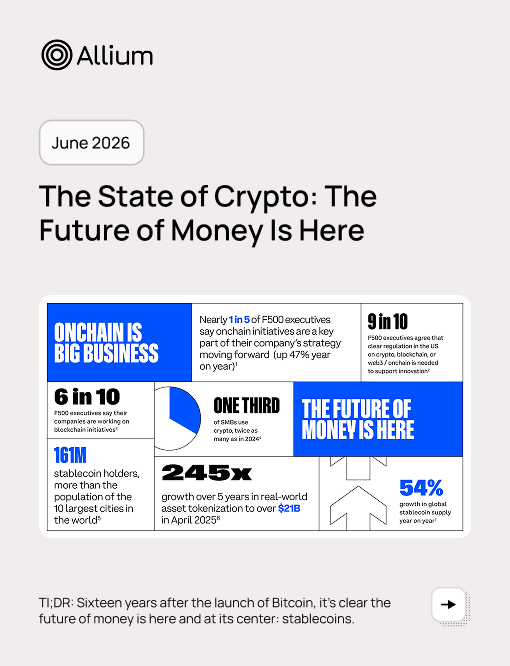
The State of Crypto: The Future of Money Is Here
Stablecoins: Five killer tests to gauge their potential
On-Chain Trading Data Gaps: Risks for Crypto Market Oversight
On-Chain Analysis of Smart Contract Dependency Risks on Ethereum
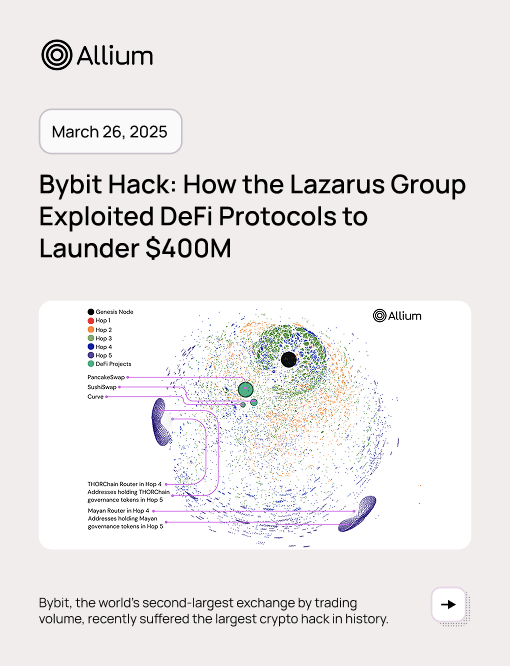
Bybit Hack: How the Lazarus Group Exploited DeFi Protocols to Launder $400M
Game Theoretic Liquidity Provisioning in Concentrated Liquidity Market Makers

Algorithmic Techniques for Utility Improvement Across the Blockchain Stack
Finance is moving onchain. Allium is the system of record it runs on.